Push-Pull Model

When launching a new product, companies often struggle to understand why customers may be reluctant to switch from their current solutions. The Push-Pull Model helps address this challenge by identifying the key factors that either drive or block customers from making the switch. By understanding the enablers and barriers to adoption, businesses can tailor their strategies to overcome resistance and encourage customers to embrace their new product or solution.
What are the four elements of the Push-Pull Model?
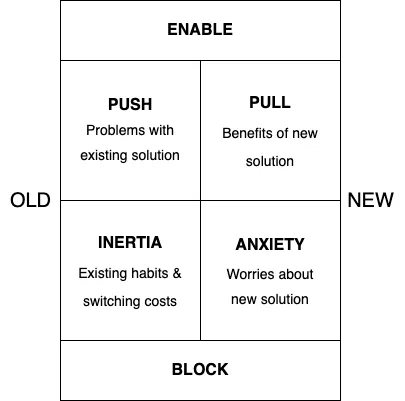
The model consists of push (problems with the current solution), pull (benefits of the new solution), inertia (habit and resistance to change), and anxiety (fear of switching to something unfamiliar).
What does 'push' mean in this model?
Push refers to the dissatisfaction or limitations customers experience with their existing product, which motivates them to consider alternatives.
How does inertia differ from anxiety?
Inertia is resistance rooted in habit and comfort with the status quo. Anxiety stems from uncertainty about whether the new solution will perform as expected.
How can businesses reduce customer anxiety about switching?
By providing evidence of effectiveness, showcasing support capabilities, and sharing examples of successful implementation in comparable situations.
How should businesses address inertia when promoting a new product?
By offering transition support such as training, demonstrating future alignment with customer needs, and where relevant, advocating for industry standards that favour the new solution.
The Push-Pull Model is based on four key elements: 'push', 'pull', 'inertia', and 'anxiety'. Each element represents a different factor that can influence a customer's decision to switch to a new solution.
Push: The Forces Driving the Switch
The 'push' element refers to the factors that drive customers away from their current solution. These are the problems, limitations, or shortcomings customers experience with their existing product or service. When a customer's current solution no longer meets their needs, it pushes them toward considering alternatives. For example, if a customer finds their current software difficult to use or lacking in key features, these problems create a push away from the existing solution.
Pull: The Attractive Benefits of the New Solution
The 'pull' element focuses on the benefits of the new solution. These are the features or advantages that attract customers to the new product. In the case of the software example, the new solution might offer better usability, more advanced features, or a more affordable price point. The 'pull' element highlights why the new product is a better option and why customers should make the switch.
While the 'push' and 'pull' elements focus on what drives customers toward or away from a product, the remaining two elements address the barriers that may prevent a switch.
Inertia: The Habit of the Existing Solution
The 'inertia' element addresses the natural resistance customers feel when considering a switch. People are creatures of habit, and many customers may continue using a product simply because they are used to it. This inertia can be a powerful force, making it difficult for customers to embrace change. They may stick with their existing solution out of comfort, routine, or fear of the unknown.
Anxiety: The Fear of the Unknown
Anxiety represents the fear customers may have about switching to a new solution. Even if the new solution offers clear advantages, customers may feel uncertain about how well it will work or whether it will live up to expectations. Anxiety can arise from concerns about the learning curve, the reliability of the new solution, or the level of support available. These worries can prevent customers from making the switch, even if they recognize the benefits.
Using the Push-Pull Model to Drive Action
Once the four elements of the Push-Pull Model are identified, businesses can use this information to create targeted strategies that overcome customer resistance and encourage adoption of the new product. A well-executed plan addresses each element to increase the likelihood of success.
Push: Addressing the Problems of the Current Solution
To encourage customers to move away from their existing solution, businesses must clearly communicate how their new product addresses the pain points customers are currently experiencing. For example, if the old solution has sustainability issues, the new product could highlight its superior environmental performance. Or, if customer service is a problem, the new solution should emphasize its enhanced technical support. By directly addressing these issues, companies can create a compelling reason for customers to make the switch.
Pull: Highlighting the Benefits of the New Solution
In addition to addressing the problems with the existing solution, businesses must also showcase the key benefits of their new product. This could include demonstrating the return on investment [ROI] the new solution offers, especially if rising costs with the old solution are a concern. Providing research and data that prove the effectiveness of the new solution can also help to build trust and credibility. By clearly communicating the advantages of the new solution, businesses can attract customers and pull them toward the switch.
Inertia: Overcoming the Comfort of the Status Quo
Overcoming inertia requires businesses to show customers why switching is necessary and beneficial. This can be done by creating a roadmap for the future that demonstrates how the new solution aligns with customer needs. Offering support during the transition phase, such as training or assistance with implementation, can also ease the switch. Additionally, influencing broader changes, such as lobbying for government regulations or industry standards that support the new solution, can further drive customers to embrace the change.
Anxiety: Reducing the Fear of the New Solution
To reduce anxiety, businesses should provide reassurance to customers about the new solution's effectiveness and reliability. This could involve highlighting research that proves the new product works as promised or showcasing the experience and capabilities of the support team. Demonstrating how the new solution has been successfully implemented in similar scenarios can also help to build confidence. By addressing customers' concerns, companies can ease the fear of the unknown and make the switch feel more secure.
The Push-Pull Model provides a comprehensive framework for understanding the factors that drive or hinder customers from adopting a new product. By analyzing the push, pull, inertia, and anxiety elements, businesses can develop targeted strategies that address each of these areas. Whether it's pushing customers away from their current solution, pulling them toward the new one, or addressing the inertia and anxiety that may prevent a switch, the Push-Pull Model helps companies create a more effective and persuasive product introduction strategy. By carefully navigating these elements, businesses can increase the chances of a successful product launch and drive long-term adoption.
Citation
Cite this article
Sridharan, M. A. (2022, July 7). Push-Pull Model. Think Insights. https://thinkinsights.net/strategy/push-pull-model (Accessed [[ACCESS_DATE]])
Sridharan, Mithun A. "Push-Pull Model." Think Insights, 7 July 2022, https://thinkinsights.net/strategy/push-pull-model. Accessed [[ACCESS_DATE]].
Mithun A. Sridharan, "Push-Pull Model," Think Insights, July 7, 2022, https://thinkinsights.net/strategy/push-pull-model. Accessed [[ACCESS_DATE]].
Sridharan, M.A. (2022) 'Push-Pull Model', Think Insights. Available at: https://thinkinsights.net/strategy/push-pull-model (Accessed: [[ACCESS_DATE]]).
M. A. Sridharan, "Push-Pull Model," Think Insights, 2022. [Online]. Available: https://thinkinsights.net/strategy/push-pull-model. [Accessed: [[ACCESS_DATE]]].
Sridharan MA. Push-Pull Model. Think Insights. Published July 7, 2022. Accessed [[ACCESS_DATE]]. https://thinkinsights.net/strategy/push-pull-model
Test Your Knowledge
Push-Pull Model
Challenge yourself on the concepts from this article and see how well you understood them.
Subscribers get weekly quizzes and insights — subscribe free
Sponsor this article
Partner with Think Insights
Reach 50,000+ business leaders, consultants, and strategists. Feature your brand alongside expert articles on strategy, leadership, and digital transformation.
Become a Sponsor