Zipcar Business Model


Zipcar rents cars by the hour or day to members who reserve vehicles through its app, part of a car-sharing model built on the idea that many people can share access to a fleet rather than each owning a vehicle. Robin Chase and Antje Danielson founded the company in Cambridge, Massachusetts, in January 2000, and it expanded into the UK, Canada and other markets before going public in 2007. Avis Budget Group acquired Zipcar for approximately $500 million in cash in 2013, folding the car-sharing brand into its broader rental portfolio alongside Avis and Budget. This article covers Zipcar's expansion history, its membership and reservation model, and how ownership under Avis Budget Group has shaped its more recent flexibility features, including one-way trips.
Who owns Zipcar?
Avis Budget Group has owned Zipcar since completing a cash acquisition worth approximately $500 million in March 2013. Zipcar operates alongside the Avis and Budget rental brands as part of Avis Budget Group's broader mobility portfolio.
How does Zipcar's pricing work?
Members pay an annual or monthly membership fee, then pay separate hourly or daily rental rates when they reserve a car, with hourly rates generally ranging from about $6 to $14 and daily rates from about $60 to $110 depending on location and vehicle type. Fuel and parking during the rental period are typically included in the price.
What happened to Zipcar's round-trip requirement?
Zipcar historically required members to return cars to the exact location where they picked them up. The company introduced one-way trips in 2014, under Avis Budget Group ownership, letting members drop cars off at a different location than where they started.
From a Cambridge apartment to a national fleet
Robin Chase and Antje Danielson co-founded Zipcar in January 2000, launching service in Massachusetts with a small fleet of cars available for hourly rental. The idea drew on a car-sharing concept Danielson had encountered in Germany, adapted for American cities where car ownership was expensive but public transit did not always cover every trip. Zipcar expanded quickly into San Francisco, New York City and Washington, adding UK service starting in London in 2004 and Canadian service in Toronto in 2006.
The company went public in 2007, raising capital to fund continued expansion at a time when car-sharing remained a novel concept for most American consumers. Growth continued through targeted acquisitions, including the 2008 purchase of UK-based car-sharing company Streetcar, which extended Zipcar's reach across British cities beyond London.1
Financial pressure and the path to acquisition
As a publicly traded company, Zipcar faced consistent pressure to deliver returns for shareholders while competing against both traditional car rental companies and newer mobility startups. The company's financial performance did not match the growth story that had taken it public, and by the early 2010s Zipcar was searching for a path to greater stability.
Avis Budget Group agreed to acquire Zipcar for $12.25 per share in cash in January 2013, a deal valued at approximately $500 million that closed that March. The price represented a steep decline from Zipcar's peak valuation near $1.2 billion, reflecting the gap between the company's early promise and its actual financial results as an independent public company.2
How membership and reservations work
Anyone who wants to use Zipcar must first register as a member, providing identification, a driver's license and payment information, then choosing a membership plan that fits their expected usage. Once approved, members reserve cars through Zipcar's app or website, selecting a vehicle type and pickup location for periods ranging from 30 minutes to several days.
Zipcar members can reserve a car for as little as 30 minutes through the company's app.
Members unlock reserved cars using either the app or a physical membership card, then return the vehicle to its designated parking spot at the end of the reservation. Late returns carry additional fees, a policy that keeps Zipcar's shared fleet available for the next member's reservation.
The shift to one-way trips
For most of its history, Zipcar operated a strict round-trip model that required members to return cars to the exact spot where they picked them up, a limitation that made the service less useful for one-directional errands or travel. Zipcar introduced one-way trips in 2014, a year after the Avis Budget Group acquisition closed, giving members the option to drop cars at a different location for an additional fee.
This change reflected a broader shift in how Avis Budget Group positioned Zipcar within its portfolio, treating flexibility improvements as a way to compete more directly with ride-hailing services and peer-to-peer car-sharing platforms that had emerged since Zipcar's founding.3
Competing with peer-to-peer platforms
Zipcar's centrally managed fleet model differs from peer-to-peer competitors Turo and Getaround, which connect individual car owners directly with renters rather than maintaining a company-owned fleet. That peer-to-peer approach typically offers a wider variety of vehicles and, in Getaround's case, often lower prices, since individual owners set their own rates rather than a centralized pricing structure. Zipcar's advantage lies in consistency: every vehicle in its fleet meets the same maintenance and insurance standards, without the variability that comes from renting a stranger's personal car.
Traditional rental companies like Enterprise Rent-A-Car compete for some of the same trips, particularly longer rentals, while ride-hailing services such as Uber pull demand from customers who would rather be driven than drive themselves.4
Ownership and current position
Avis Budget Group has owned Zipcar since 2013, operating it alongside the Avis and Budget rental brands as part of a broader mobility strategy that spans both traditional car rental and car-sharing. Zipcar has surpassed one million members globally, a base that generates steady revenue from annual membership fees regardless of how often individual members actually rent a car.5
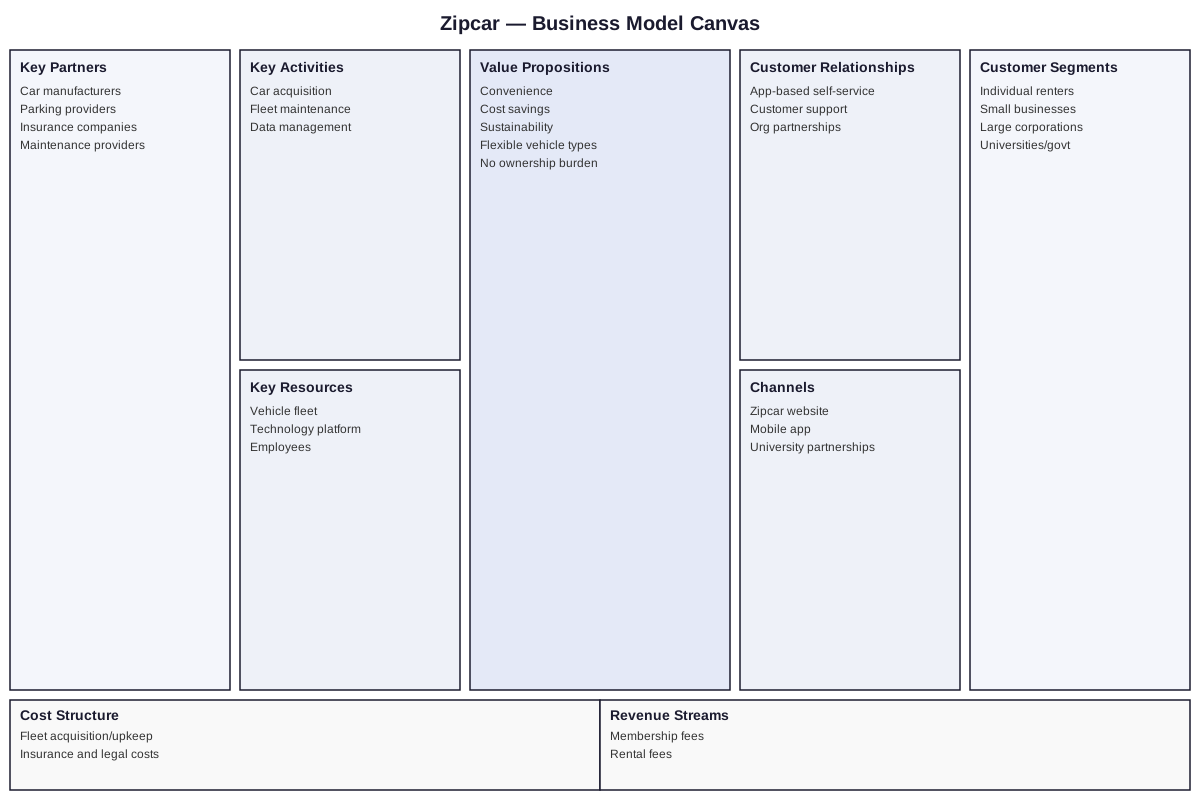
Key Partners
Car manufacturers supply the vehicles that make up Zipcar's fleet, negotiated through Avis Budget Group's broader purchasing relationships across its rental brands. Parking providers supply the dedicated spots where Zipcar vehicles are stationed and returned in cities where the company operates. Insurance companies and maintenance and repair service providers keep Zipcar's fleet roadworthy and covered, a continuous operational need given how frequently the vehicles change drivers.
Key Activities
Car acquisition and fleet management represent core activities, requiring Zipcar to continually balance vehicle availability against demand in each of its markets. Vehicle maintenance keeps cars safe and reliable despite frequent use by different drivers, a more demanding cycle than typical personal car ownership. Data management supports the technology behind reservations and unlocking, while marketing efforts focus on urban residents and organizations considering car-sharing as an alternative to vehicle ownership.
Key Resources
Zipcar's fleet of vehicles, spanning compact cars, SUVs and a growing number of electric vehicles, forms the company's most visible resource. Its technology platform, covering the app and reservation system members use to find, book and unlock cars, underpins the entire service experience. Employees managing fleet logistics, customer support and local operations across Zipcar's many markets round out the company's resource base.
Value Propositions
For individual members, Zipcar offers convenience through app-based reservations that take minutes, avoiding the paperwork and wait times of traditional car rental. Cost savings appeal to members who need a car only occasionally, since Zipcar's rates undercut the total cost of owning, insuring and maintaining a personal vehicle. Sustainability draws environmentally conscious members, since shared vehicles reduce the total number of cars on the road, while a fleet that includes electric vehicles appeals to members who want lower-emission transportation options.
Customer Relationships
Zipcar interacts with members primarily through its app and website, where members manage reservations, view billing and access support resources. The company offers customer service channels for issues that arise during rentals, from vehicle problems to billing disputes. Corporate and university partnerships involve a more managed relationship, since Zipcar coordinates fleet access for entire organizations rather than individual members alone.
Channels
The Zipcar website and mobile app serve as the primary channels through which members reserve, unlock and pay for vehicles. Social media channels support marketing and customer engagement, particularly in urban markets where Zipcar competes for attention against ride-hailing and other mobility options. Partnerships with universities and businesses function as an additional channel, introducing Zipcar's service to students and employees who may not have sought it out independently.
Customer Segments
Individual car renters make up Zipcar's largest customer segment, using the service for personal errands, trips and occasional longer journeys. Small and medium-sized businesses represent a segment that uses Zipcar for occasional business travel without maintaining a company vehicle fleet. Large corporations, government agencies, colleges and universities round out Zipcar's customer base, often negotiating organizational access that gives many individual employees or students the ability to reserve cars under one account.
Cost Structure
Fleet acquisition and maintenance costs represent Zipcar's largest expense category, covering vehicle purchases, upkeep and the parking spots where cars are stationed. Insurance and legal costs cover the liability exposure inherent in operating a shared vehicle fleet used by many different drivers. Salaries and wages support Zipcar's operations staff and customer service teams, while marketing and advertising costs fund efforts to attract new members in each of the company's markets.
Revenue Streams
Membership fees provide Zipcar with steady recurring revenue from members regardless of how frequently they actually rent a vehicle. Rental fees, charged based on the duration of each reservation, make up the largest share of the company's revenue. Fleet management services, which help large organizations manage their own vehicle fleets, and partnership revenue from universities, businesses and advertisers round out Zipcar's income sources.
Zipcar's history reflects both the promise and the limits of the car-sharing model it helped popularize. The company proved that enough urban residents would trade car ownership for hourly access to make a national business, but it never generated the consistent profits its early growth suggested it might, which pushed it toward a corporate acquirer rather than continued independence. Under Avis Budget Group, Zipcar gained financial stability and features like one-way trips that its round-trip-only model had lacked for years. Its core customer base remains concentrated in dense urban markets and college campuses, a geographic limit that has not changed much since the company's founding. Competition from peer-to-peer platforms like Turo and Getaround has pushed Zipcar to lean more heavily on partnerships with universities and businesses, where its centrally managed fleet still offers advantages that individually owned rental cars cannot easily match.
Citation
Cite this article
Sridharan, M. A. (2022, March 19). Zipcar Business Model. Think Insights. https://thinkinsights.net/strategy/zipcar-business-model (Accessed [[ACCESS_DATE]])
Sridharan, Mithun A. "Zipcar Business Model." Think Insights, 19 Mar. 2022, https://thinkinsights.net/strategy/zipcar-business-model. Accessed [[ACCESS_DATE]].
Mithun A. Sridharan, "Zipcar Business Model," Think Insights, March 19, 2022, https://thinkinsights.net/strategy/zipcar-business-model. Accessed [[ACCESS_DATE]].
Sridharan, M.A. (2022) 'Zipcar Business Model', Think Insights. Available at: https://thinkinsights.net/strategy/zipcar-business-model (Accessed: [[ACCESS_DATE]]).
M. A. Sridharan, "Zipcar Business Model," Think Insights, 2022. [Online]. Available: https://thinkinsights.net/strategy/zipcar-business-model. [Accessed: [[ACCESS_DATE]]].
Sridharan MA. Zipcar Business Model. Think Insights. Published March 19, 2022. Accessed [[ACCESS_DATE]]. https://thinkinsights.net/strategy/zipcar-business-model
Test Your Knowledge
Zipcar Business Model
Challenge yourself on the concepts from this article and see how well you understood them.
Subscribers get weekly quizzes and insights — subscribe free
Sponsor this article
Partner with Think Insights
Reach 50,000+ business leaders, consultants, and strategists. Feature your brand alongside expert articles on strategy, leadership, and digital transformation.
Become a Sponsor