Reed's Law

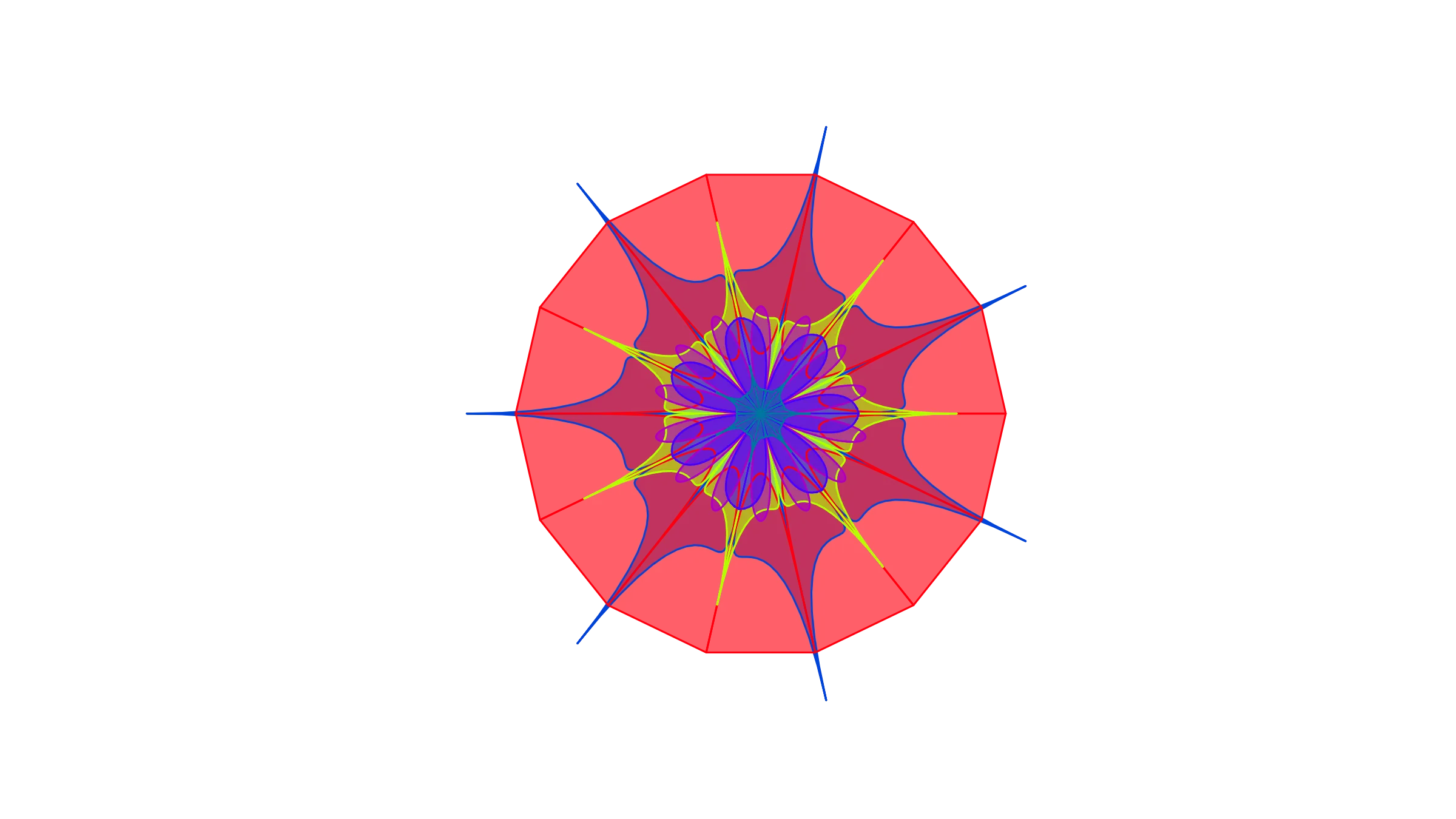
Do not evaluate a network only by counting users or pairwise connections. Reed's Law argues that some networks become especially valuable because they let participants form groups, communities and affiliations inside the larger system. That changes the logic of growth. A new user does not only add one more endpoint or one more set of bilateral connections. That user can also participate in, create and strengthen many subgroups organized around shared goals, identities, or interests. This matters for social platforms, collaboration systems, community products, marketplaces and digital ecosystems where value comes from many-to-many coordination. The strategic question is not merely how many users a network has. It is whether the network helps those users cluster into meaningful, self-sustaining groups
What is Reed's Law?
Reed's Law is the idea that networks can gain value exponentially as users form groups and communities within them.
Who proposed it?
David P. Reed proposed the idea in 1999 while discussing group-forming networks.
How is it different from Metcalfe's Law?
Metcalfe's Law focuses on pairwise connections, while Reed's Law emphasizes the added value of groups, clusters and many-to-many interaction.
What is a group-forming network?
It is a network with features that allow users to create and sustain subgroups such as communities, clubs, teams, chats, or interest groups.
Why can value rise so quickly?
Because the number of possible subgroups grows extremely fast as more users can combine in different ways.
Does Reed's Law mean every possible group is valuable?
No. It describes potential value, not the guaranteed realized value of every subgroup.
Where is the law most relevant?
It is most relevant in social platforms, community products, collaboration tools and ecosystems built around shared participation.
What is the strategic insight?
Product value may come less from the network as a whole than from the communities it enables inside the network.
What are the main criticisms?
Critics argue that most possible groups never form, many formed groups add little value and exponential formulas can overstate real utility.
What is the main takeaway?
Networks become more powerful when they help people organize themselves into meaningful communities
Some networks become more useful because they connect one user to another. Others become more useful because they help many users organize themselves into groups. Reed's Law is a way of thinking about that second dynamic. It argues that the real value of some networks comes not only from direct connections but from the communities, teams, clubs, channels and subcultures that can emerge inside them. For strategy leaders, that is a major distinction because group formation often drives retention, identity, coordination and platform defensibility.
What Reed's Law says
Reed's Law is the claim that the utility of a group-forming network can scale exponentially with the number of participants because the number of possible subgroups grows extremely quickly as the network expands1. The idea is associated with David P. Reed, who argued in 1999 that networks enabling affiliation among subsets of users create a different order of value from networks limited to broadcast or one-to-one transactions.
The essential move in the theory is simple. A network does not only contain users and links. It can also contain clusters of users who organize around shared goals, identities, interests, or tasks. Once that happens, the network becomes more than a communications layer. It becomes an environment for self-organizing communities.
That is why Reed positioned group-forming networks as distinct from simpler network models. In these systems, value comes not only from who can reach whom, but from what subsets of people can become together.
Why groups change the economics of a network
Groups alter network value because they create social and functional structures inside the broader system. A messaging network lets two people reach one another. A group-forming network lets dozens or thousands of people coalesce around a topic, project, cause, fandom, professional identity, or local need. That creates stickiness that goes beyond contact lists.
Once groups form, users often gain more reasons to return. They are not just checking for messages. They are participating in recurring contexts that matter to them. Communities create norms, archives, rituals, roles and reputation. These features can turn a generic network into a place people belong.
This is the core strategic insight. A network with communities can create value at a higher layer than raw connectivity. Product utility comes from the ability to coordinate and affiliate, not just to transmit information.
Why Reed's Law goes beyond Metcalfe's Law
Metcalfe's Law is based on the idea that value rises with the number of possible pairwise connections in a network. Reed's Law argues that this still understates what happens when users can form groups. Instead of focusing only on one-to-one links, Reed drew attention to the huge number of potential subsets that can emerge from a set of participants2.
That difference matters because many modern platforms are not just connection tools. They are tools for clustering. A social platform with feeds, channels, group chats, communities, events and shared spaces is not limited to pairwise interaction. Its value often comes from helping many users gather around something specific.
This is why Reed's Law often feels more relevant than Metcalfe's Law for community-driven products. The product becomes more useful not only because more people are reachable, but because more coherent sub-networks can emerge inside it.
What the math is trying to capture
The mathematical intuition behind Reed's Law is that the number of possible nontrivial subgroups in a network of n members grows roughly like 2 raised to n, after excluding empty or trivial cases. That produces the familiar claim that group-forming networks can scale value exponentially rather than quadratically3.
The point of that formula is not that every theoretical subgroup becomes real or valuable. It is that the possibility space expands extraordinarily fast. With each additional participant, the network can support many more combinations of affiliation. In products where communities matter, that combinatorial expansion can create new modes of value that are invisible in simpler user-count models.
Used carefully, the math is a way to point at latent structure. It tells leaders that group-capable systems can contain more economic and social possibility than pairwise models reveal.
Why critics push back
The main criticism of Reed's Law is that it confuses possible groups with valuable groups. Most theoretical subgroups in a large network never form. Of those that do form, many are inactive, redundant, trivial, or destructive. That makes literal exponential valuation unrealistic in most real systems.
This criticism is fair and important. A platform with millions of users may support an immense number of possible communities, but only a small fraction will become meaningful, durable and value-creating. In practice, design quality, moderation, discovery, norms and shared purpose matter far more than theoretical combinatorics. Critics have therefore argued that Reed's Law is better treated as a statement about potential than as a direct pricing formula for networks4.
That does not destroy the insight. It sharpens it. The question is not whether the number of possible groups explodes mathematically. It does. The real question is whether the product converts enough of that possibility into real community value.
Where the law is most relevant
Reed's Law is most useful in products where affiliation is central. Social networks, group chats, online forums, gaming guilds, workplace collaboration tools, open-source ecosystems and creator communities all fit this pattern. In such settings, the network becomes more valuable as users build smaller units of belonging and coordination within the larger graph.
This also explains why many successful platforms invest heavily in community features rather than relying only on feeds or messaging. Tools for moderation, membership, discovery, invitations, shared archives, recurring events and group identity all help transform raw networks into community systems. When that works, retention often improves because users are anchored not just to the product, but to one another.
Contemporary network-effect frameworks continue to describe Reed's Law as especially relevant to social and group-centric platforms where the many-to-many structure creates more value than one-to-one connectivity alone5.
What leaders should do with it
First, leaders should ask whether their product merely connects users or actually helps them form durable groups. If the answer is only connection, then Reed's Law may not be the right model. If the answer is coordinated community, then group design deserves strategic attention.
Second, leaders should focus on the mechanics of group formation. Discovery, trust, moderation, identity, invitations and shared purpose are not secondary features. They are the infrastructure that turns theoretical subgroup potential into actual value. Without them, the network may remain large but socially thin.
Third, leaders should evaluate quality of community, not just quantity of users. A smaller network with vibrant, high-trust groups can be more resilient and defensible than a much larger network with weak participation and little meaningful affiliation. Reed's Law is therefore most useful when it shifts attention from aggregate scale to the social architectures growing within that scale.
The deeper lesson
Reed's Law matters because it identifies a higher layer of network value. A network is not just a set of nodes and edges. In many cases, it is a social substrate on which communities form. Those communities can create loyalty, shared norms, repeated participation and coordinated action that make the network much more valuable than simple connection counts suggest.
The law should not be used naively. Most possible groups do not matter and some make a product worse. But as a strategic lens, it remains powerful. It reminds leaders that the strongest networks often win not because everyone is connected to everyone else, but because the network makes it easy for the right subsets of people to find one another and build something together.
That is the real executive lesson. Count users, but study the communities.
Reed's Law remains useful because it highlights a layer of value that simpler network models often miss. Networks do not only connect individuals. The strongest ones also support the formation of small groups, recurring communities and purposeful affiliations that make participation stickier and more productive. That does not mean every possible subgroup has equal or even positive value. Many groups never form and some create noise, fragmentation, or conflict. The real lesson is more practical. When a product makes it easy for relevant communities to form, coordinate and persist, growth can expand not just the number of users but the social structures that keep the network alive and strategically hard to replace
Citation
Cite this article
Sridharan, M. A. (2019, September 20). Reed's Law. Think Insights. https://thinkinsights.net/strategy/reeds-law (Accessed [[ACCESS_DATE]])
Sridharan, Mithun A. "Reed's Law." Think Insights, 20 Sep. 2019, https://thinkinsights.net/strategy/reeds-law. Accessed [[ACCESS_DATE]].
Mithun A. Sridharan, "Reed's Law," Think Insights, September 20, 2019, https://thinkinsights.net/strategy/reeds-law. Accessed [[ACCESS_DATE]].
Sridharan, M.A. (2019) 'Reed's Law', Think Insights. Available at: https://thinkinsights.net/strategy/reeds-law (Accessed: [[ACCESS_DATE]]).
M. A. Sridharan, "Reed's Law," Think Insights, 2019. [Online]. Available: https://thinkinsights.net/strategy/reeds-law. [Accessed: [[ACCESS_DATE]]].
Sridharan MA. Reed's Law. Think Insights. Published September 20, 2019. Accessed [[ACCESS_DATE]]. https://thinkinsights.net/strategy/reeds-law
Test Your Knowledge
Reed's Law
Challenge yourself on the concepts from this article and see how well you understood them.
Subscribers get weekly quizzes and insights — subscribe free
Sponsor this article
Partner with Think Insights
Reach 50,000+ business leaders, consultants, and strategists. Feature your brand alongside expert articles on strategy, leadership, and digital transformation.
Become a Sponsor