Management Structure


Management Structure determines how the roles, power and responsibilities are assigned, controlled, and coordinated, and how information flows among the different levels of management.
What is a management structure?
A management structure defines how a company organizes its hierarchy, determining lines of authority, communication, rights, and duties across different management levels.
How do Board, Middle, and Lower Management differ structurally?
Lower Management typically has a marked hierarchy. Middle Management is organized around business functions with collaborative decision-making. Board and Upper Management tend toward decentralized structures with distributed decision-making power.
How do cultural norms influence management structures?
Egalitarian cultures, such as Sweden, tend to produce flatter organizational structures. More hierarchical cultures, such as Japan, tend to support structured, top-down organizations. IKEA and Toyota are respective examples.
What is Holacracy, as used at Zappos?
Holacracy is a framework that removes power from a traditional management hierarchy and distributes it across the organization, enabling employees to self-direct their work and act more like entrepreneurs.
What are some alternative management structure models?
Examples include Li & Fung's network-based structure prioritizing internal and external connections, W.L. Gore's Lattice structure enabling direct contact among associates, and Zappos' Holacracy model emphasizing self-organization.
A management structure describes how a company organizes its management hierarchy. In almost all organizations, a hierarchy exists. This hierarchy determines the lines of authority, communications, rights and duties of that organization. Within an organization, the structure differs, depending on Board, Middle and Lower management. Usually, a marked hierarchy prevails at the Lower Management.
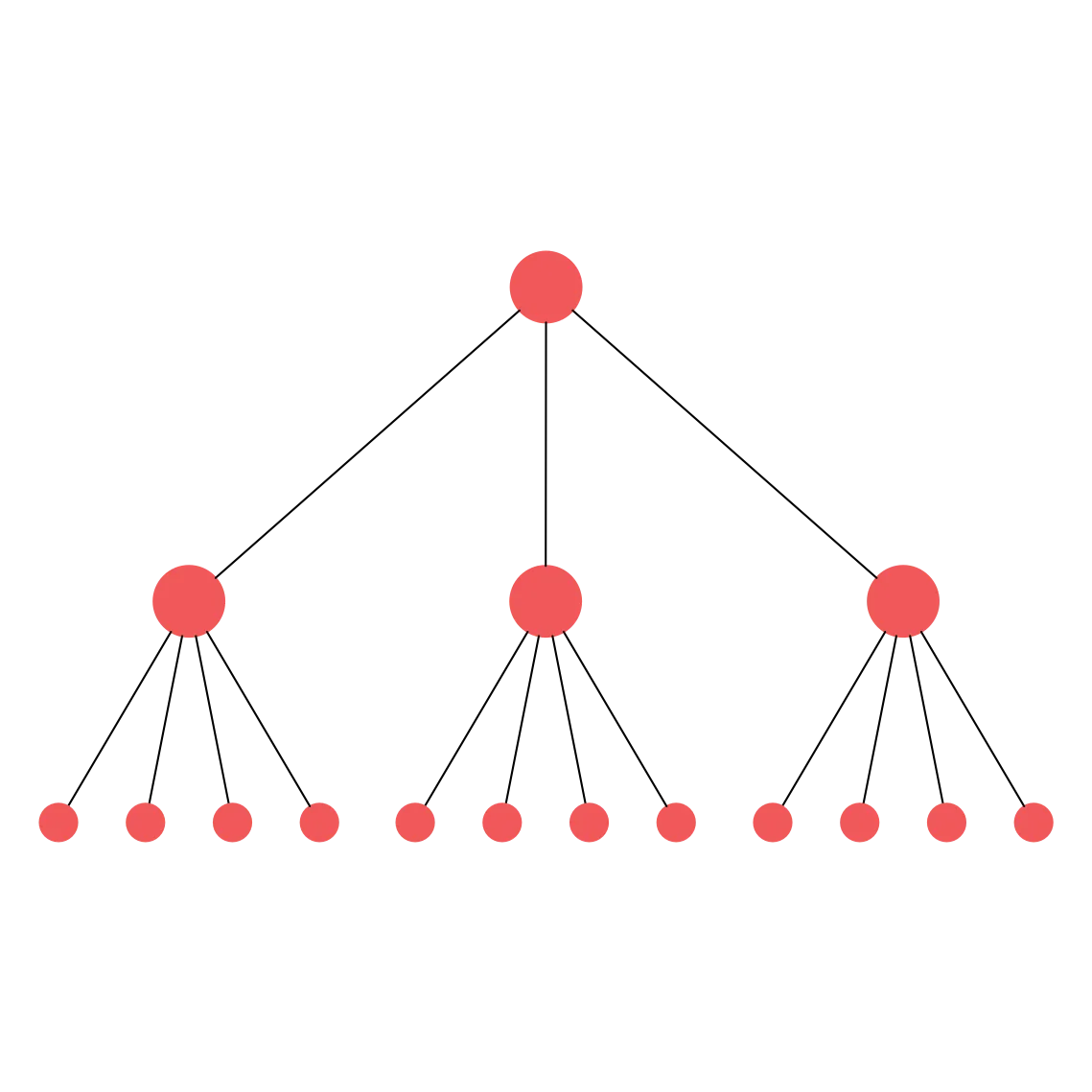
The Middle Management is usually based on business functions that collaborate on decision making as the situation requires.

At Board Level and Upper Management, a decentralized structure prevails. The decision making power is equally distributed and the departments and divisions may have different degrees of independence.

Management Structures are strongly influenced by the social and cultural norms:
- In egalitarian countries, such as Sweden, companies tend to have a flatter, less hierarchical organizational structure. When IKEA, a Swedish company, opened stores in the United States, many American employees were uncomfortable with different employees all having the same title.
- Toyota, one of the leading Japanese automobile manufacturers in the world, the company employs a hierarchical structure, which supports its business goals and strategic aims.
- At Hong Kong's largest export trading company, Li & Fung, networking is prioritized, which includes networking inside the company, networking outside the company, and across the whole ecosystem.
- U.S.-based manufacturer W.L. Gore follows a Lattice structure that makes more direct contact and interconnection among associates to make a decision or get information.
- At Zappos, Holacracy is the framework to structure, govern, and run the company. In this structure, power is removed from the management hierarchy and distributed across the organization.

According to Tony Hsieh of Zappos:
Research shows that every time the size of a city doubles, innovation or productivity per resident increases by 15%. But when companies get bigger, innovation or productivity per employee generally goes down. So we're trying to figure out how to structure Zappos more like a city, and less like a bureaucratic corporation. In a city, people and businesses are self-organizing. We're trying to do the same thing by switching from a normal hierarchical structure to a system called Holacracy, which enables employees to act more like entrepreneurs and self-direct their work instead of reporting to a manager who tells them what to do.
In today's era of Digital Transformation, many companies are racing to implement a flatter organizational structure 3and re-invent their organizations 4, but choosing the wrong one can have disastrous consequences. It's not about choosing the most popular, trendiest flat organization to adopt; it's about finding the one that works best for your organization.
- 1Holacracy: The New Management System for a Rapidly Changing World
- 2Reinventing Organizations: A Guide to Creating Organizations Inspired by the Next Stage of Human Consciousness
- 3Holacracy: The New Management System for a Rapidly Changing World
- 4Reinventing Organizations: A Guide to Creating Organizations Inspired by the Next Stage of Human Consciousness
Citation
Cite this article
Sridharan, M. A. (2018, July 11). Management Structure. Think Insights. https://thinkinsights.net/strategy/management-structure (Accessed [[ACCESS_DATE]])
Sridharan, Mithun A. "Management Structure." Think Insights, 11 July 2018, https://thinkinsights.net/strategy/management-structure. Accessed [[ACCESS_DATE]].
Mithun A. Sridharan, "Management Structure," Think Insights, July 11, 2018, https://thinkinsights.net/strategy/management-structure. Accessed [[ACCESS_DATE]].
Sridharan, M.A. (2018) 'Management Structure', Think Insights. Available at: https://thinkinsights.net/strategy/management-structure (Accessed: [[ACCESS_DATE]]).
M. A. Sridharan, "Management Structure," Think Insights, 2018. [Online]. Available: https://thinkinsights.net/strategy/management-structure. [Accessed: [[ACCESS_DATE]]].
Sridharan MA. Management Structure. Think Insights. Published July 11, 2018. Accessed [[ACCESS_DATE]]. https://thinkinsights.net/strategy/management-structure
Test Your Knowledge
Management Structure
Challenge yourself on the concepts from this article and see how well you understood them.
Subscribers get weekly quizzes and insights — subscribe free
Sponsor this article
Partner with Think Insights
Reach 50,000+ business leaders, consultants, and strategists. Feature your brand alongside expert articles on strategy, leadership, and digital transformation.
Become a Sponsor