Industry Analysis: Green Biotechnology

Industrial biotechnology has moved from laboratory promise to procurement decision. Chief executives evaluating bio-based materials, fuels or enzymes should treat this as a make-partner-or-wait choice tied to a specific molecule and a specific cost curve, not a broad industry bet. Margin concentrates in enzyme and strain intellectual property and in scarce fermentation capacity, not in commodity output. Buyers, particularly large consumer and chemical companies, are gaining leverage as more producers chase the same offtake contracts, while feedstock owners and specialty contract manufacturers hold pricing power upstream. The industry sits within a broader bioeconomy that McKinsey estimates could generate two trillion to four trillion dollars in annual direct impact by the 2030s, with more than half of that value outside human health, concentrated in materials, chemicals and energy. Capital allocators should prioritize ventures with locked-in feedstock, proven fermentation titers and forward offtake agreements over those still chasing proof of concept.
Is industrial biotechnology attractive for new entrants?
Attractiveness varies sharply by segment. Enzyme engineering and specialty ingredient niches reward focused entrants with strong computational biology talent, while bulk biofuel and commodity bioplastic production require capital intensity that favors incumbents and well-funded joint ventures. A narrow entrant with a defensible strain and a signed offtake agreement can succeed without owning a full fermentation plant.
Which parts of the value chain are most profitable?
Strain and enzyme intellectual property capture the highest margin, followed by contract development and manufacturing organizations that operate scarce fermentation capacity. Commodity-grade output, particularly bulk biofuel and undifferentiated bioplastic resin, earns thin margin because it competes directly against petrochemical benchmarks.
How is technology changing this industry?
Artificial Intelligence-assisted protein design and gene synthesis have cut enzyme development cycles from years to weeks and precision fermentation is displacing older whole-cell approaches for high-value proteins and specialty chemicals. Cell-free biomanufacturing systems are also emerging, removing the metabolic constraints of living cells and improving reaction speed and yield predictability.
What capabilities are table stakes vs differentiators?
Fermentation process engineering and regulatory navigation are table stakes that every serious participant must master. Differentiation comes from proprietary strain libraries, computational protein design capability and long-term feedstock agreements that competitors cannot easily replicate.
How should investors and consultants evaluate opportunities here?
Evaluate ventures on titer and yield data validated at pilot or demonstration scale, not laboratory scale and on whether a credible offtake partner has already signed a commercial agreement. Capital efficiency toward first commercial plant and a realistic timeline to cost parity with the incumbent petrochemical or fossil pathway, separate durable businesses from perpetual pilot projects.
What is the difference between industrial biotechnology and agricultural or healthcare biotechnology?
Industrial biotechnology applies engineered organisms and enzymes to materials, chemicals, fuels and waste treatment rather than to crops or human therapeutics. It shares underlying tools such as gene editing and fermentation with those adjacent fields but sells into different customers, under different regulatory regimes and with different unit economics.
Why do so many industrial biotechnology ventures fail to scale past pilot plants?
Scale-up from laboratory flask to commercial fermenter routinely reveals problems that bench-scale data cannot predict, including contamination control, oxygen transfer limits and downstream separation costs that erode projected margins. Many ventures also underestimate the capital required for a first-of-a-kind commercial plant and run out of funding during the demonstration phase, a gap the industry calls the valley of death.
How dependent is this industry on carbon pricing and subsidy policy?
Segments such as sustainable aviation fuel and bio-based chemicals remain dependent on tax credits, mandates or carbon pricing to close the cost gap with fossil alternatives, which makes policy stability a material determinant of investment returns. Segments such as enzymes for detergents or food processing already compete on performance and cost without subsidy, making them less policy-sensitive.
What role do large chemical and consumer companies play in shaping the industry?
Incumbents such as major chemical manufacturers and consumer packaged goods companies increasingly fund, license or acquire biotechnology ventures rather than build capability internally, supplying distribution, regulatory expertise and offtake volume in exchange for equity or preferential pricing. This partnership model has become the primary route to commercial scale for capital-constrained start-ups.
What geographic factors influence where biomanufacturing capacity gets built?
Feedstock availability, industrial gas or waste-carbon streams and proximity to end markets for materials and fuels drive siting decisions, alongside government incentives for domestic manufacturing capacity. North America currently holds the largest share of synthetic biology investment and demonstration capacity, though China and parts of Europe are expanding rapidly through state-backed bioeconomy programs.
Industrial biotechnology, sometimes labeled green or white biotechnology to distinguish it from the red biotechnology of pharmaceuticals and the agricultural biotechnology of seed traits, applies engineered microorganisms, enzymes and cell-free biological systems to the production of materials, chemicals, fuels and the remediation of environmental contamination. It sits at the intersection of synthetic biology, chemical engineering and industrial process design and it is reshaping how executives across packaging, apparel, transportation fuel and specialty chemicals think about their raw material base. This article examines the segment as a distinct industry, separate from agricultural biotechnology and human health biotechnology and evaluates where value is created, where it is captured and what determines competitive success.
Industry at a glance
Industrial biotechnology encompasses the engineering of microbes, enzymes and cell-free systems to manufacture products that substitute for or improve upon petrochemical-derived materials and processes. In scope are precision fermentation for proteins and specialty chemicals, enzyme engineering for industrial catalysts, bioplastics and biopolymers, biofuels including sustainable aviation fuel, carbon-capture-to-chemical pathways and bioremediation services that use engineered or naturally occurring organisms to break down pollutants. Out of scope are gene-edited seed traits and crop protection, which belong to agricultural biotechnology and therapeutic proteins, vaccines or diagnostics, which belong to healthcare biotechnology, even though all three fields draw on the same underlying toolkit of gene editing, DNA synthesis and strain engineering.
The industry's customers span three categories. Business-to-business sales dominate, with chemical companies, consumer packaged goods manufacturers, textile producers and fuel blenders purchasing bio-based intermediates or finished materials to substitute into existing supply chains. Business-to-government sales matter disproportionately relative to revenue share, because government mandates for renewable fuel content, procurement preferences for bio-based materials and research grants for demonstration-scale plants often determine whether a venture reaches commercial viability at all. Business-to-consumer sales remain limited and mostly indirect, occurring through branded end products such as apparel or packaging that carry a bio-based ingredient claim rather than through direct sale of the biotechnology itself.
The sector depends heavily on adjacent industries for its economics to work. It needs cheap, reliable feedstock, whether that is agricultural sugar, industrial waste gas, municipal solid waste or captured carbon dioxide and feedstock price volatility passes directly into unit economics. It needs the chemical and energy industries as both customers and competitive benchmarks, since nearly every bio-based product is priced against an incumbent fossil-derived equivalent. It also depends on capital markets tolerant of long development timelines, since moving a strain or process from laboratory to commercial scale routinely takes seven to twelve years and requires financing through multiple rounds of the alternative fuels and chemicals maturation curve.
Indicative economics vary widely by sub-segment but share common structural features. Capital intensity is high for any venture that builds owned fermentation or gasification assets, with a single commercial-scale demonstration plant often costing between one hundred million and half a billion dollars. Labor intensity is comparatively low once a plant is operating, concentrated instead in the research and process-development phase where computational biologists, fermentation engineers and process chemists command premium compensation. Regulatory intensity differs sharply by application: enzymes sold into food processing or detergents face established approval pathways, while novel organisms released into open environments for bioremediation or agriculture-adjacent uses face more scrutiny. Revenue models split between licensing of strain and process intellectual property, contract manufacturing fees and direct sale of bio-based commodities priced against fossil benchmarks, with the last model exposing producers most directly to commodity price cycles.1
Industry segmentation
The industry organizes naturally around six segments, dimensioned primarily by product category and secondarily by position in the value chain. Precision fermentation and biomanufacturing covers the engineering of microorganisms, most often yeast or bacteria, to produce specific proteins, enzymes or specialty chemicals through controlled fermentation, serving customers in food ingredients, industrial enzymes and fine chemicals. Bioplastics and biopolymers covers materials such as polylactic acid, polyhydroxyalkanoates and bio-based polyethylene that substitute for conventional plastics in packaging, textiles and consumer goods, sold to converters and brand owners who mold or extrude the resin into finished products.
Industrial enzyme engineering forms its own segment because of its distinct economics and customer base, supplying catalytic proteins used in detergents, textile processing, paper production, biofuel conversion and food manufacturing, where the enzyme itself is a small-volume, high-value input rather than a bulk commodity. Biofuels and bio-based chemicals from waste carbon covers the conversion of agricultural residue, municipal waste, industrial off-gas or captured carbon dioxide into ethanol, sustainable aviation fuel or chemical building blocks such as ethylene, a segment defined by heavy capital requirements and direct competition against fossil fuel benchmarks.
Bioremediation and environmental biotechnology covers the use of engineered or selected microorganisms and enzymes to break down contaminants in soil, water and industrial waste streams, sold primarily as a service to industrial operators, government agencies and environmental remediation contractors rather than as a physical product. Finally, enabling technology and tools, comprising DNA synthesis, gene-editing platforms, computational protein design software and strain engineering services, sits upstream of the other five segments and captures value by selling tools and services to biomanufacturers rather than competing directly in end-product markets. These segments overlap at the edges, since a single company such as an enzyme producer may also sell into biofuel conversion, but the customer relationships, sales cycles and cost structures differ enough to warrant separate strategic treatment.
Market structure
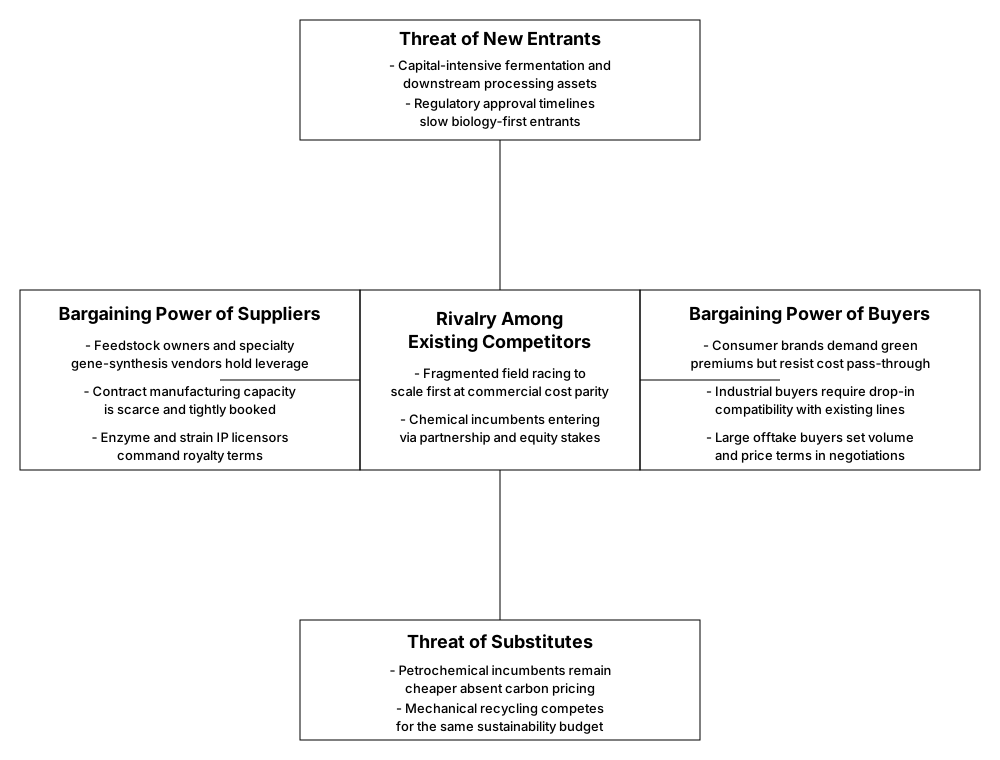
The industry's structure reflects a young, technically differentiated field still negotiating its position against an entrenched petrochemical incumbency. Supplier power is elevated because feedstock owners, gene-synthesis vendors and scarce contract manufacturers hold leverage over most producers. Buyer power is rising as large chemical and consumer companies gain optionality among a growing but still fragmented set of biotechnology suppliers. Rivalry is intense among venture-funded entrants racing to reach commercial scale first, tempered by extensive partnership activity with incumbents. New entrants face high capital and regulatory barriers in capital-intensive segments but low barriers in narrow enzyme or ingredient niches. Substitutes, chiefly the existing petrochemical and mechanical recycling pathways, remain the primary competitive threat because they are almost always cheaper absent policy intervention.
Bargaining power of buyers
Buyers in industrial biotechnology fall into two broad categories that exercise power differently. Large consumer packaged goods companies and apparel brands buy bio-based materials in pursuit of sustainability commitments and often pay a premium for verified content, but that premium has compressed as more suppliers enter the market and as brands face consumer resistance to visible price increases. Industrial buyers, including chemical processors and fuel blenders, evaluate bio-based inputs purely on drop-in compatibility with existing equipment and on delivered cost relative to the fossil-derived equivalent, which gives them significant leverage to demand price parity or near-parity before committing volume.
Concentration works in buyers' favor in most segments because a handful of global consumer goods companies and chemical manufacturers account for a disproportionate share of potential offtake volume and biotechnology producers depend on securing one or two anchor customers to justify a commercial-scale plant. This dependency inverts the typical power relationship: rather than a producer selling into a diversified customer base, a single large buyer's offtake agreement often determines whether a plant gets built at all, giving that buyer outsized negotiating leverage over price, volume commitments and even equity participation. Switching costs for buyers are generally low once a bio-based input is proven equivalent to its fossil counterpart, since most biomanufacturers design their output to be chemically interchangeable rather than to require reformulation of the buyer's downstream process.
Buyers also increasingly use dual-sourcing and volume-splitting strategies, allocating offtake across multiple biotechnology suppliers and traditional fossil suppliers simultaneously to hedge against any single producer's execution risk. This further dilutes the pricing power of individual biomanufacturers, who must compete not only against fossil incumbents but against each other for the same limited pool of committed buyers willing to sign multi-year offtake agreements.
| Buyer type | Primary leverage | Typical constraint on producers |
|---|---|---|
| Consumer packaged goods and apparel brands | Sustainability premium, brand differentiation | Price sensitivity beyond a narrow premium threshold |
| Chemical processors and fuel blenders | Volume concentration, drop-in cost parity demand | Must match or beat fossil benchmark pricing |
| Government and institutional buyers | Procurement mandates, grant-linked purchasing | Slow procurement cycles, compliance overhead |
| Fashion and textile manufacturers | Multi-year contract volume | Requires consistent quality at commercial scale |
Bargaining power of suppliers
Suppliers to industrial biotechnology companies include feedstock providers, gene-synthesis and DNA sequencing vendors and contract development and manufacturing organizations that operate scarce fermentation capacity. Feedstock power varies by input:
agricultural sugar suppliers compete in a relatively liquid global commodity market with modest individual leverage, while suppliers of specialized waste streams, industrial off-gas or captured carbon dioxide often hold local monopoly positions because only a handful of industrial sites generate the specific input a given biomanufacturing process requires
Contract manufacturing capacity represents the most significant supplier constraint facing the industry today. Fermentation capacity suitable for commercial-scale biomanufacturing is limited worldwide and demand from a growing number of well-funded ventures has outpaced the construction of new large-scale bioreactors, giving existing contract manufacturers meaningful pricing power and the ability to prioritize customers with the strongest balance sheets or most strategic partnerships. Gene-synthesis and DNA sequencing vendors, though more numerous and increasingly commoditized at the low end, retain pricing power at the high end of complex, long-sequence synthesis work required for novel strain design.
Intellectual property licensors of foundational strains, enzymes or gene-editing techniques also function as suppliers with considerable leverage, since royalty and licensing terms can materially affect a biomanufacturer's margin structure even after commercial launch. This dynamic mirrors the licensing economics seen in software and pharmaceuticals, where the owner of a foundational platform technology can extract an ongoing toll from downstream commercial applications regardless of how efficiently the licensee operates its own production process.
| Supplier category | Source of leverage | Effect on biomanufacturers |
|---|---|---|
| Contract fermentation and scale-up facilities | Capacity scarcity, technical qualification requirements | Higher tolling fees, longer capacity booking lead times |
| Specialized feedstock and waste-carbon providers | Local exclusivity, limited alternative sources | Site-specific dependency, exposure to feedstock price swings |
| Gene-synthesis and sequencing vendors | Technical complexity at the high end | Elevated cost for novel or long-sequence designs |
| Strain and enzyme intellectual property licensors | Ownership of foundational platform technology | Ongoing royalty burden on commercial revenue |
Rivalry among existing competitors
Competitive intensity in industrial biotechnology is high but structured differently than in mature industries, because most participants are racing toward a common cost-parity threshold rather than fighting over a fixed pool of existing demand. Dozens of venture-funded companies pursue overlapping applications, particularly in sustainable aviation fuel, bioplastics and precision-fermented proteins and the winner in each narrow application tends to be determined by who reaches commercial-scale cost parity with the fossil incumbent first, since being first materially eases access to offtake agreements and follow-on capital.
Large chemical and energy incumbents complicate this rivalry by entering through partnership, minority investment or joint venture rather than head-on competition, which means venture-funded start-ups often compete against consortiums that combine start-up technology with incumbent capital and distribution rather than against the incumbents directly. This blurs traditional competitive boundaries and rewards start-ups that secure a strategic partner early, since that partnership can determine access to capital, feedstock and customers more decisively than the underlying technology's technical merit.
Price competition is muted in the near term because most bio-based products still carry a cost premium over fossil equivalents and compete instead on sustainability credentials, but this masks an underlying race toward a technically inevitable convergence:
as more producers reach commercial scale in a given application, the segment shifts from technology differentiation to cost and reliability competition, compressing margins for producers who have not achieved sufficient scale
The winner in each biomanufacturing application is rarely the company with the most elegant biology, it is the company that reaches reliable commercial-scale production cost first
| Competitive dimension | Current dynamic |
|---|---|
| Number of well-funded entrants per application | High, often ten or more chasing the same molecule |
| Basis of competition | Sustainability credential today, shifting toward cost parity |
| Role of incumbents | Partner and investor more often than direct competitor |
| Consolidation activity | Increasing through acquisition of scaled demonstration plants |
Threat of new entrants
Barriers to entry diverge sharply between capital-intensive and narrow-application segments. Building a commercial-scale fermentation or gasification plant requires capital in the hundreds of millions of dollars, multi-year permitting processes and specialized engineering talent, all of which deter casual entrants and favor well-capitalized ventures or incumbent joint ventures. This capital barrier has become more pronounced as capacity constraints in contract manufacturing push more entrants toward owning their own scale-up assets rather than relying on shared facilities.
By contrast, entry into narrow enzyme engineering or specialty ingredient niches remains comparatively accessible, since a small team with strong computational protein design capability and access to gene-synthesis services can develop and license a novel enzyme without owning any physical production infrastructure, relying instead on contract manufacturers for scale-up. The falling cost and rising speed of gene synthesis and Artificial Intelligence-assisted protein design have measurably lowered this particular barrier over the past several years, compressing enzyme development timelines from years to weeks in some applications.
Regulatory pathways add a further layer of differentiated barriers. Enzymes destined for established uses such as detergents or food processing follow well-trodden approval routes, while novel organisms intended for open-environment release, as in some bioremediation applications, face longer and less predictable regulatory review that raises effective entry barriers for that specific application even though the underlying technology may be mature.
| Entry barrier | Segment most affected | Severity |
|---|---|---|
| Commercial-scale plant capital requirement | Biofuels, bulk bioplastics, waste-carbon conversion | High |
| Regulatory approval for environmental release | Bioremediation, novel organism applications | Moderate to high |
| Access to gene-synthesis and computational design tools | Enzyme engineering, specialty ingredients | Low and falling |
| Feedstock access and offtake agreement | All segments dependent on waste-carbon or agricultural inputs | Moderate |
Threat of substitutes
The dominant substitute across nearly every industrial biotechnology application is the incumbent fossil-derived or conventional alternative it seeks to replace and this substitute typically remains cheaper absent a carbon price, subsidy or regulatory mandate. Conventional plastics derived from petroleum, fossil-based jet fuel and mined or synthesized chemical intermediates all benefit from decades of process optimization and existing infrastructure that bio-based alternatives cannot yet match on unit cost in most applications.
Mechanical and chemical recycling represent a second category of substitute that competes for the same sustainability-oriented capital and procurement budget as bio-based materials, particularly in packaging, where a brand owner choosing between recycled-content plastic and bio-based plastic often bases the decision on relative cost and supply reliability rather than a strict environmental preference. This creates a competitive dynamic in which industrial biotechnology must outperform not only its fossil predecessor but also other decarbonization pathways vying for the same corporate sustainability spend.
Direct electrification and green hydrogen present a longer-term substitute threat in the fuels segment specifically, since aviation and heavy transport decarbonization strategies increasingly weigh sustainable aviation fuel against synthetic fuel produced from green hydrogen and captured carbon, a pathway that does not depend on biological conversion at all. The relative cost trajectory of these competing decarbonization technologies over the next decade will materially affect how much of the transport fuel substitution opportunity accrues to biological versus purely chemical or electrochemical pathways.
| Substitute category | Applications most exposed | Basis of competition |
|---|---|---|
| Conventional fossil-derived materials and fuels | Nearly all segments | Delivered unit cost |
| Mechanical and chemical recycling | Bioplastics, packaging | Cost and supply reliability |
| Green hydrogen and synthetic fuel pathways | Sustainable aviation fuel, heavy transport | Long-term cost trajectory |
| Reduced-consumption or reuse models | Packaging, textiles | Avoids material substitution entirely |
Value chain and profit pools
The value chain begins with upstream inputs, comprising feedstock, whether agricultural sugar, industrial waste gas, captured carbon dioxide or municipal waste, alongside the enabling tools of gene synthesis, sequencing and computational protein design that inform strain and enzyme development. This stage is capital-light for the design work itself but feedstock-dependent for cost and it is where much of the industry's proprietary intellectual property originates.
Strain and process development follows, encompassing the laboratory and pilot-scale work of engineering an organism or enzyme and proving that it performs at a titer and yield sufficient to justify commercial investment. This stage is talent-intensive, requiring computational biologists and fermentation scientists and it is where most ventures spend the majority of their early capital while generating no revenue.
Scale-up and commercial production constitutes the most capital-intensive stage, requiring either owned fermentation and processing assets or contracted capacity at a third-party facility and it is where execution risk peaks because performance that worked at laboratory or pilot scale frequently degrades when transferred to industrial fermenters. Distribution and logistics follow, moving finished bio-based materials, fuels or chemicals to converters, blenders or direct industrial customers, a stage that increasingly resembles conventional chemical distribution rather than anything unique to biotechnology.
The customer interface stage covers sales, offtake negotiation and, in consumer-facing applications, certification and marketing of bio-based content claims, a function that has grown in importance as sustainability claims face increasing scrutiny from regulators and consumers alike. Finally, enabling infrastructure, including specialized engineering firms, equipment manufacturers for bioreactors and separation systems and testing and certification bodies, supports every other stage without directly producing an end product, capturing value through service fees and equipment sales rather than product margin.
Profit pool
Profit concentrates disproportionately in strain and enzyme intellectual property and in scarce contract manufacturing capacity, while it thins considerably in commodity-grade bulk output. A company that owns a proprietary enzyme or microbial strain and licenses it, or sells the resulting specialty chemical at a premium justified by superior performance, captures margin comparable to specialty chemical businesses, often in the range of established industrial enzyme producers whose product represents a small fraction of a customer's total input cost but delivers an outsized performance benefit. This favorable position exists because the enzyme's value to the buyer, measured in energy savings, yield improvement or process simplification, vastly exceeds its cost, giving the enzyme seller pricing power largely disconnected from its own production cost.
By contrast, producers of bulk biofuel or undifferentiated bioplastic resin operate much closer to commodity economics, competing directly against fossil benchmark pricing with margins that compress toward the marginal cost of production, particularly during periods of low oil prices when the fossil alternative becomes cheaper. This bifurcation has sharpened over the past several years as more producers entered bulk segments simultaneously, while the number of companies with genuinely differentiated, hard-to-replicate strain or enzyme intellectual property has grown more slowly.
Contract development and manufacturing organizations that operate scarce fermentation capacity have also captured a growing share of industry profit, benefiting from a seller's market in scale-up capacity even though they do not own the underlying product intellectual property. This shift mirrors what occurred in pharmaceutical contract manufacturing a decade earlier, where capacity scarcity temporarily handed manufacturing service providers pricing power that outpaced growth in the branded products they served.
Industry economics and business models
Three business model patterns dominate the industry, each with distinct capital and risk profiles. The licensing model, most common among enzyme and strain developers, generates revenue through upfront licensing fees and ongoing royalties on a partner's commercial production, requiring minimal capital investment in physical assets but demanding sustained investment in research and intellectual property protection. This model offers attractive margin and capital efficiency but limits total addressable revenue to a share of the licensee's output value rather than the full product price.
The vertically integrated producer model, common in bulk biofuels and bioplastics, involves owning or long-term controlling fermentation, processing and sometimes feedstock assets, capturing the full value chain margin but requiring substantial capital investment and accepting the execution risk of commercial-scale operations. This model rewards companies with access to patient capital and strong project finance capability, since a single commercial plant can require project debt structured over a decade or more.
A hybrid contract manufacturing and partnership model has emerged as the most common path for capital-constrained ventures, pairing a technology developer's strain or process intellectual property with an incumbent chemical or consumer company's capital, feedstock access and offtake commitment. This model reduces the technology developer's capital burden and de-risks scale-up by leveraging an established partner's operational expertise, though it typically means sharing a larger share of eventual profit with that partner in exchange for reduced risk and faster time to market.
Cost drivers and scalability
Fixed costs dominate the cost structure once a venture reaches commercial scale, driven by the depreciation of fermentation and processing assets, facility overhead and the specialized engineering staff required to keep a bioprocess running within tight quality tolerances. Variable costs center on feedstock, which can represent a substantial share of total production cost depending on the application and on energy consumption for fermentation, heating and downstream separation processes.
Economies of scale matter enormously in this industry because fermentation and separation equipment costs do not scale linearly with output volume, meaning a larger plant achieves meaningfully lower cost per unit of output than a smaller one, which is why so many ventures aim for large first commercial plants rather than incremental capacity additions. Economies of scope also appear at the strain engineering level, where a company with a strong computational protein design platform can apply that same underlying capability across multiple enzyme or strain projects, amortizing the platform investment across a broader product portfolio.
Unit economics hinge on fermentation titer, the concentration of target product achieved per batch and on downstream separation efficiency, since a process that produces a promising titer in the laboratory but requires expensive purification can still fail commercially. Yield improvement over time, achieved through iterative strain engineering and process optimization, functions as the industry's primary learning curve and its closest analog to a scale-driven flywheel:
each improvement in titer or yield lowers unit cost, which improves competitiveness against fossil benchmarks, which increases offtake volume, which in turn funds further process optimization
Moats, advantages and strategic levers
Defensibility in industrial biotechnology rests primarily on intellectual property protecting a specific strain, enzyme or process, combined with the accumulated process knowledge gained from operating that strain at commercial scale, knowledge that is difficult to replicate even by a competitor who could legally access the same underlying organism. This learning advantage compounds over time, since a company that has run a fermentation process at commercial scale for several years accumulates operational data on contamination control, yield optimization and quality consistency that a new entrant cannot shortcut.
Feedstock access forms a second durable moat, particularly for companies that have secured long-term contracts for specialized waste streams or industrial off-gas, since these inputs are often geographically constrained and available in limited quantity, making early movers difficult to displace once they have locked in supply. Regulatory approval also functions as a moat in applications where novel organism release requires extended review, since a company that has already secured approval for a given use case gains a meaningful head start over competitors still navigating the same regulatory process.
Switching costs for downstream customers are generally moderate rather than high, since most bio-based products are designed for drop-in compatibility, but they rise meaningfully once a customer has qualified a specific supplier's material through its own quality assurance and manufacturing processes, a qualification process that can take a year or more and that customers are reluctant to repeat without strong reason. Network effects are largely absent from this industry, unlike platform businesses, though a loose analog exists in the growing ecosystem of shared contract manufacturing infrastructure, where early customers of a scale-up facility help fund capacity expansions that benefit later customers.
Strategic levers
An entrant or incumbent has several concrete levers available. Focusing on a narrow, well-defined customer segment or molecule, rather than attempting to address multiple applications simultaneously, allows a company to reach commercial-scale proof points faster and to build the deep process knowledge that constitutes the industry's primary moat, a discipline that distinguishes companies that reach commercial scale from those that remain perpetually in pilot phase across too many parallel projects.
Choosing between vertical integration and partnership represents perhaps the most consequential strategic decision a company makes, since building owned fermentation and processing assets captures more value but requires far more capital and accepts execution risk directly, while partnering with an incumbent chemical or consumer company trades away future margin for reduced capital burden and faster access to distribution and offtake. The right choice depends heavily on a company's access to patient capital and on how differentiated its underlying technology is relative to what a partner could replicate independently.
Geographic expansion strategy should follow feedstock and regulatory logic rather than simple market size, since the economics of a biomanufacturing plant depend heavily on proximity to its specific feedstock source and on the regulatory environment governing novel organism use in that jurisdiction. Ecosystem orchestration, in which a company positions itself as the technology or intellectual property hub coordinating multiple contract manufacturers, feedstock suppliers and offtake customers rather than owning every stage of the value chain directly, offers a capital-efficient path to scale for companies with strong platform technology but limited balance sheet capacity.
Structural risks, regulation and trends
Several structural risks warrant board-level attention. Regulatory risk is substantial and bidirectional: supportive policy, such as renewable fuel mandates or bio-based procurement preferences, can materially improve a venture's economics, while policy reversal or expiration of tax credits can just as quickly erase a project's viability, making policy dependency a key underwriting variable for any investment in subsidy-sensitive segments such as sustainable aviation fuel. Technology disruption risk cuts both ways, since advances in computational protein design and cell-free biomanufacturing could just as easily benefit an incumbent's next-generation process as displace its current one, meaning today's technology leader is not guaranteed to remain ahead as design tools continue to improve.
Commodity price risk affects the industry asymmetrically, since a drop in oil and gas prices directly narrows the cost gap that bio-based products are trying to close, while feedstock price volatility on the input side can independently erode margin regardless of output pricing. Geopolitical and supply chain risk has grown more salient as governments increasingly treat domestic biomanufacturing capacity as a strategic asset, which can work in a company's favor through subsidy and preferential procurement but can also expose companies with concentrated feedstock or manufacturing footprints to trade policy disruption.
On the demand side, corporate decarbonization commitments and tightening regulation on single-use plastics and aviation emissions continue to expand the addressable market for bio-based substitutes, even as individual companies face near-term margin pressure. On the supply side, falling costs for gene synthesis and computational protein design are steadily lowering the capital and time required to bring a new strain or enzyme to market, which should increase the pace of new product introduction over the coming decade even as it intensifies competition within each application niche.
For new entrants, the more defensible entry strategy favors a narrow application with a credible path to cost parity over a broad platform bet spread across multiple end markets, paired with an early partnership decision that trades some future margin for faster access to capital, feedstock and offtake. Regulatory strategy should be treated as a core workstream from the earliest stage of company formation rather than an afterthought, particularly for any application involving environmental release of a novel organism. For incumbents in chemicals, consumer goods and energy, the more effective posture combines selective investment or acquisition of promising biotechnology ventures with disciplined internal capability building in fermentation and process engineering, positioning the incumbent to capture value from the eventual winners in each application rather than attempting to out-innovate specialized biotechnology companies directly.2, 3
Caselet: LanzaTech and the economics of carbon-to-chemical fermentation
LanzaTech offers a instructive window into how industrial biotechnology companies actually navigate the gap between promising laboratory science and commercially viable production. Founded in New Zealand in 2005 and later headquartered in Illinois, the company built its business around a specific technical insight: certain bacteria, related to those found in animal digestive systems, can consume carbon monoxide and carbon dioxide from industrial waste gas and ferment it into ethanol and other chemical building blocks. Rather than pursuing a broad platform strategy across many applications simultaneously, the company focused for over a decade on proving this single conversion pathway at increasing scale before diversifying into adjacent products.
The company's operating model illustrates the partnership-heavy structure common across capital-intensive segments of the industry. Instead of building and owning every commercial plant itself, LanzaTech developed its fermentation technology and then licensed it into joint ventures with steel producers and industrial gas emitters who supplied the waste carbon monoxide feedstock and, in several cases, co-invested in the commercial facility. This structure let the company avoid shouldering the full capital burden of plant construction alone while securing something equally valuable:
a feedstock supplier with a direct incentive to make the partnership succeed, since the steel producer benefited from converting an emissions liability into a revenue-generating byproduct stream
The first commercial-scale carbon refining plant, built in partnership with a Chinese steel producer, began operating in 2018, more than a decade after the company's founding, illustrating just how long the path from strain development to commercial output can run in this industry. Additional facilities followed in Belgium and India, each replicating the same partnership template of pairing LanzaTech's fermentation technology and engineered bacterial strain with a local industrial partner who supplied feedstock and capital. By 2024, the company reported having produced tens of millions of gallons of ethanol from waste carbon since its plants began operating, avoiding a meaningful volume of carbon dioxide emissions relative to conventional ethanol production.
LanzaTech's more recent strategic evolution demonstrates the value chain migration common to maturing biotechnology companies: having proven the core fermentation technology, the company expanded downstream into higher-value derivative chemicals, including ethylene and other building blocks used in textiles and packaging and formed brand partnerships with apparel companies seeking verified low-carbon material inputs for their supply chains. This progression from commodity ethanol toward differentiated specialty chemical derivatives reflects the profit pool dynamics described earlier in this analysis:
bulk output competes on cost against fossil benchmarks, while differentiated downstream derivatives sold to brand-conscious customers command a premium justified by verified sustainability credentials rather than by cost alone
The company's path also underscores the capital intensity and patience required to succeed in this industry. Reaching public markets in 2023 through a merger with a special purpose acquisition company, LanzaTech had by then raised capital across nearly two decades of development, reflecting a timeline far longer than most venture investors associate with a typical technology company. Its subsequent public filings show a business still working through the operational challenges of running fermentation facilities at commercial scale across multiple continents and industrial partners, a reminder that even a company with a proven, patented core technology and blue-chip industrial partners faces a long runway between technical validation and durable profitability. The company's trajectory offers a template other industrial biotechnology ventures increasingly follow:
prove one conversion pathway rigorously, partner rather than build alone for capital-intensive scale-up and migrate toward higher-margin downstream derivatives once the core technology reaches commercial reliability4, 5
Industrial biotechnology's central strategic tension, illustrated clearly by cases like this one, is that the science increasingly works while the economics remain a persistent construction project. Executives evaluating this industry should focus less on whether a given biological conversion pathway is technically feasible, since most core science questions in mature segments have already been answered and more on whether a specific venture has assembled the feedstock access, partnership structure and capital discipline required to survive the years-long journey from demonstration plant to reliable commercial-scale profitability.
Industrial biotechnology reprocesses carbon, waste and biomass into materials, fuels and chemicals that have historically come from oil and gas. Its economics still trail petrochemical incumbents on unit cost, but regulatory pressure, corporate decarbonization commitments and falling gene-synthesis costs are narrowing that gap year by year. Margin sits with those who own proprietary strains, enzymes or fermentation capacity rather than those selling finished commodity output. The durable strategic levers are feedstock lock-in, vertical integration into scale-up assets and partnership with incumbent chemical and consumer companies who supply distribution and offtake. Executives should treat this industry as a portfolio of narrow, molecule-specific bets rather than one undifferentiated category and should underwrite each bet against a credible path to cost parity, not against aspirational sustainability narratives alone.
Citation
Cite this article
Sridharan, M. A. (2024, January 17). Industry Analysis: Green Biotechnology. Think Insights. https://thinkinsights.net/strategy/industry-analysis-green-biotechnology (Accessed [[ACCESS_DATE]])
Sridharan, Mithun A. "Industry Analysis: Green Biotechnology." Think Insights, 17 Jan. 2024, https://thinkinsights.net/strategy/industry-analysis-green-biotechnology. Accessed [[ACCESS_DATE]].
Mithun A. Sridharan, "Industry Analysis: Green Biotechnology," Think Insights, January 17, 2024, https://thinkinsights.net/strategy/industry-analysis-green-biotechnology. Accessed [[ACCESS_DATE]].
Sridharan, M.A. (2024) 'Industry Analysis: Green Biotechnology', Think Insights. Available at: https://thinkinsights.net/strategy/industry-analysis-green-biotechnology (Accessed: [[ACCESS_DATE]]).
M. A. Sridharan, "Industry Analysis: Green Biotechnology," Think Insights, 2024. [Online]. Available: https://thinkinsights.net/strategy/industry-analysis-green-biotechnology. [Accessed: [[ACCESS_DATE]]].
Sridharan MA. Industry Analysis: Green Biotechnology. Think Insights. Published January 17, 2024. Accessed [[ACCESS_DATE]]. https://thinkinsights.net/strategy/industry-analysis-green-biotechnology
Test Your Knowledge
Industry Analysis: Green Biotechnology
Challenge yourself on the concepts from this article and see how well you understood them.
Subscribers get weekly quizzes and insights — subscribe free
Sponsor this article
Partner with Think Insights
Reach 50,000+ business leaders, consultants, and strategists. Feature your brand alongside expert articles on strategy, leadership, and digital transformation.
Become a Sponsor