Industry Analysis: Alternative Medicine


Growth in alternative medicine is real, but margin is not evenly distributed. Branded supplement makers and multi-location practice networks capture the most durable profit, because they own either a trusted label or a scheduling relationship with the patient, while single-practitioner clinics and commodity ingredient suppliers absorb price pressure. Executives evaluating this space should prioritize categories where a credential, a formulation patent, or a retail relationship creates a real switching cost and should treat consumer trust as the scarcest asset in the value chain. Bargaining power is moving toward retailers, insurers and large digital platforms that control consumer attention and distribution and away from independent practitioners and raw ingredient suppliers who compete largely on price. Capital should follow evidence generation, regulatory navigation and brand equity, not undifferentiated product manufacturing.
Is alternative medicine attractive for new entrants?
Attractiveness depends on the segment. Branded supplement lines carry low capital barriers but face intense retail competition and thin margins once marketing spend is included. Licensed practice categories such as acupuncture or chiropractic care require credentialing and local reputation building, which slows entry but also protects incumbents once established. The most attractive pockets are clinically specific niches, such as integrative oncology support or fertility-adjacent naturopathy, where evidence generation and physician referral relationships create durable moats that generic wellness brands cannot easily replicate.
Which parts of the value chain are most profitable?
Branded finished-goods manufacturing and multi-location practice networks capture the highest margins, because both control the customer relationship and can charge for trust rather than raw material cost. Contract manufacturing and raw ingredient supply, by contrast, operate on thin, commodity-like margins despite carrying real quality and safety liability. Distribution through owned retail or subscription channels also captures disproportionate value compared to wholesale distribution through third-party retailers.
How is technology changing this industry?
Telehealth platforms have extended the reach of licensed practitioners beyond their physical location, turning what was once a purely local service business into one with regional and even national scale potential. Direct-to-consumer testing, wearable data and personalized formulation algorithms are shifting supplement marketing from generic claims toward individualized regimens, which commands premium pricing. Artificial Intelligence is also beginning to accelerate literature review and evidence synthesis, narrowing the credibility gap between alternative and conventional care faster than in prior decades.
What capabilities are table stakes vs differentiators?
Regulatory compliance, quality manufacturing certification and basic digital storefront presence are table stakes that every serious operator must have simply to stay in business. Differentiation comes from clinical evidence generation, practitioner network density, proprietary formulations protected by patents or trade secrets and the ability to build a recognizable consumer brand that survives scrutiny from skeptical media and regulators. Operators who invest only in marketing without building any of these differentiators tend to see rapid customer churn once a competitor undercuts them on price.
How should investors or consultants evaluate opportunities here?
Investors should screen for evidence quality, repeat-purchase economics and regulatory exposure before evaluating growth rate alone, since rapid revenue growth in this industry can mask weak retention or looming compliance risk. Consultants advising incumbents should focus engagement on building defensible intellectual property around formulations or protocols, professionalizing practitioner training and credentialing and helping clients navigate the increasingly active regulatory environment across major markets. The strongest opportunities combine a credible evidence base with a scalable distribution model, rather than relying on either alone.
What is the difference between alternative, complementary and integrative medicine?
Alternative medicine refers to non-conventional practices used in place of standard medical care, complementary medicine refers to the same practices used alongside conventional treatment and integrative medicine describes a coordinated model where both are combined deliberately within a single care plan. The commercial industry increasingly favors the integrative framing, because it positions products and services as additive to, rather than competitive with, mainstream health care, which broadens the addressable market and reduces regulatory friction.
Why do insurers cover some alternative medicine services but not others?
Insurers extend coverage where clinical evidence and cost-offset data are strongest, most commonly chiropractic care, acupuncture for specific pain conditions and some forms of physical therapy adjacent bodywork. Coverage decisions follow actuarial evidence on whether a service reduces downstream costs, such as fewer opioid prescriptions or reduced surgical referrals, rather than following consumer popularity. This creates a structural incentive for practitioner associations and manufacturers to fund outcomes research, since reimbursement approval materially expands addressable demand.
What role do celebrity and influencer endorsement play in this industry?
Endorsement remains one of the most cost-effective customer acquisition channels available to supplement and wellness brands, often outperforming traditional advertising on a cost-per-acquisition basis. It also carries reputational risk, since a single high-profile controversy or safety incident tied to an endorser can damage brand trust across an entire product portfolio within days. Sophisticated operators increasingly pair endorsement marketing with visible quality certifications to offset the credibility risk inherent in influencer-led growth.
How concentrated is competition in this industry globally?
Global competition remains fragmented relative to most consumer health categories, with the largest branded supplement companies holding single-digit percentage shares of the total market. Fragmentation exists because trust in alternative medicine is often locally rooted, tied to regional herbal traditions, national regulatory regimes and practitioner reputation, which limits the portability of a single global brand. Consolidation is occurring gradually through acquisition of niche brands by larger consumer health conglomerates seeking category diversification.
What macro trends will most shape this industry over the next decade?
Aging populations in developed markets will sustain demand for pain management and chronic condition support, both core alternative medicine use cases, while rising middle-class incomes in Asia will expand demand for traditional medicine systems already embedded in local culture. Regulatory tightening, particularly around supplement safety claims and practitioner licensing, will raise compliance costs and likely accelerate consolidation among smaller operators unable to absorb them. The WHO Global Traditional Medicine Strategy 2025-2034 also signals a broader push to integrate traditional and complementary practices into national health systems, which could materially expand institutional demand.
Alternative medicine occupies an unusual position in the health economy: half consumer packaged goods, half regulated clinical service and increasingly a testing ground for how evidence, trust and technology reshape a market that conventional medicine has often dismissed. Executives evaluating this space frequently misjudge it as a single homogeneous category, when in fact it spans dietary supplements sold on retail shelves, hands-on therapies delivered by licensed practitioners and traditional medicine systems embedded in national health policy across large parts of Asia and Africa. Understanding where value concentrates within that spread and how bargaining power is shifting among suppliers, practitioners, retailers and payers, is the difference between a sound capital allocation decision and a costly misread of a market that looks simple from the outside and behaves quite differently once inside it.
Industry at a glance
Alternative medicine, for the purposes of this analysis, covers non-conventional health products and services that consumers use either instead of or alongside mainstream medical treatment. This includes dietary and herbal supplements, traditional medicine systems such as Ayurveda and traditional Chinese medicine, manual therapies including chiropractic care, osteopathy and massage, energy and mind-body practices such as acupuncture, yoga and meditation instruction and naturopathic and homeopathic clinical services. It excludes conventional pharmaceuticals, medical devices cleared through standard regulatory pathways and hospital-based care, even where those institutions have begun offering integrative services under the same roof.
The industry serves a mix of business-to-consumer and business-to-business customers, though the former dominates by revenue. Individual consumers purchase supplements at retail or online and pay out of pocket for practitioner visits in the large majority of transactions worldwide. Employers increasingly act as business-to-business buyers, funding workplace wellness programs and acupuncture or chiropractic benefits as part of broader health plans aimed at reducing absenteeism and claims costs. Government plays a dual role as both regulator and, in markets such as India, China and several European countries, a direct purchaser of traditional medicine services through public health systems that formally recognize them.
Revenue models split cleanly between product sales, which follow standard retail and consumer packaged goods economics and service fees, which follow the economics of professional services with capacity constrained by practitioner hours. Capital intensity is low relative to pharmaceuticals or hospital care, since most manufacturing is outsourced to contract producers and most clinical delivery happens in small leased premises rather than capital-heavy facilities. Labor intensity is high on the services side, where a practitioner's trained hours are the primary constraint on output and regulatory intensity varies enormously by jurisdiction and modality, from near-total absence of premarket review for U.S. supplements to strict licensing regimes for chiropractic and acupuncture practice.
Indicative metrics illustrate how different this industry looks from conventional health care once examined closely. Gross margins on branded supplements typically run higher than in most packaged food categories, reflecting the premium consumers pay for perceived health benefit rather than any large difference in raw material cost, while margins on clinical services depend far more heavily on practitioner utilization than on pricing power alone. Working capital needs are modest for service providers, who bill largely at the point of care, but more significant for supplement brands carrying inventory across a wide product range and managing the working capital drag of retail payment terms that can stretch well beyond thirty days. Average customer acquisition cost has risen steadily across digital channels as more brands compete for the same paid search and social media inventory, a trend that rewards operators with strong organic word-of-mouth or clinical referral channels over those relying solely on paid marketing.
Industry segmentation
The industry divides into six segments defined primarily by value chain position and delivery format. Dietary and nutritional supplements form the largest segment by revenue, encompassing vitamins, minerals, herbal extracts and specialty formulations sold through retail, direct selling and increasingly direct-to-consumer subscription channels. Traditional medicine systems constitute a distinct segment built around codified practices such as Ayurveda, traditional Chinese medicine and Unani medicine, which carry deep cultural roots and, in several countries, formal integration into national health policy and public insurance coverage.
Manual and bodywork therapies, including chiropractic care, osteopathic manipulation and therapeutic massage, form a services segment defined by licensed practitioners delivering hands-on treatment in clinical settings. Acupuncture and traditional Chinese medicine services occupy an overlapping but increasingly distinct segment in Western markets, where practitioners often operate independently of broader Chinese medicine philosophy and focus narrowly on pain management applications with growing insurance recognition. Mind-body and movement practices, spanning yoga instruction, meditation training and related disciplines, represent a fast-growing segment that blends fitness, wellness and therapeutic positioning, often delivered through studios, apps and corporate wellness contracts rather than clinical settings.
Naturopathic and homeopathic clinical practice makes up a smaller but distinct segment, combining elements of conventional diagnostic consultation with alternative treatment protocols, typically delivered by practitioners holding a formal naturopathic doctorate in jurisdictions that recognize the credential. Each segment carries a different regulatory posture, capital structure and growth trajectory and conflating them, as generalist market reports often do, obscures where the actual strategic opportunity and risk reside.
Market structure
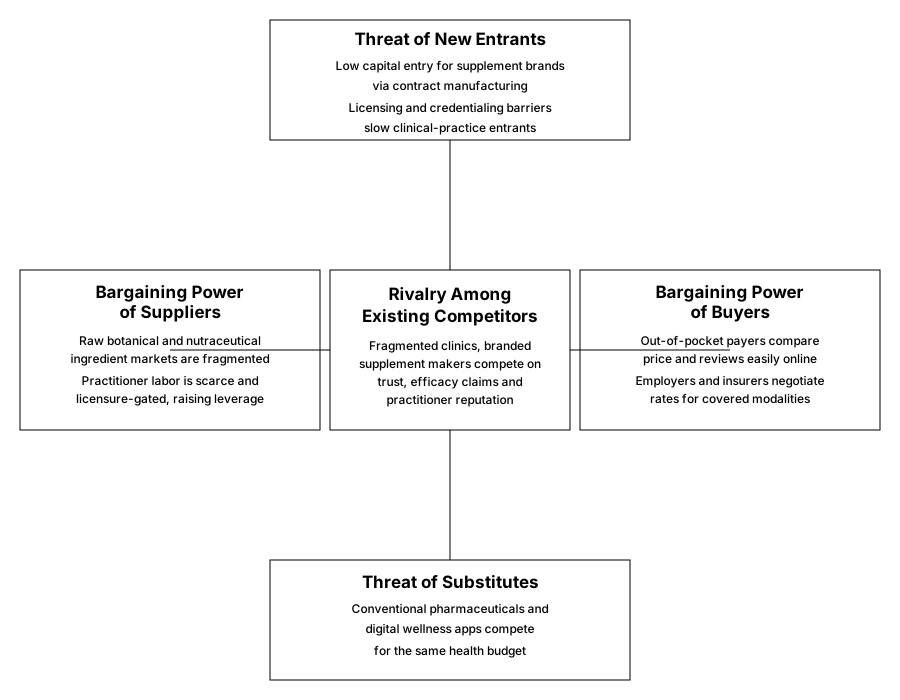
Industry structure follows a pattern common to fragmented consumer health markets: low entry barriers on the product side, moderate barriers on the licensed services side and bargaining power distributed unevenly across a value chain with no single dominant player. Rivalry is intense in supplements, where thousands of brands compete for retail shelf space and digital attention, while services remain locally fragmented because trust in a practitioner does not travel easily across geography. Substitution risk from conventional medicine and digital wellness tools is rising, even as demand for both categories continues to grow in parallel rather than strictly displacing one another.
Bargaining power of buyers
Buyer power varies sharply between the product and service halves of the industry. Individual consumers buying supplements online or in retail wield considerable power, because price comparison is instantaneous, switching costs are close to zero and countless substitute brands sell functionally similar formulations. Retail chains and large e-commerce platforms compound this dynamic by demanding listing fees, promotional allowances and favorable payment terms from supplement manufacturers competing for shelf visibility, effectively transferring margin from brand to retailer. Corporate wellness buyers and insurers, meanwhile, negotiate service rates directly with practitioner networks, using scale to secure discounts in exchange for guaranteed patient volume, a dynamic that mirrors managed care negotiations in conventional medicine.
Individual patients seeking a specific licensed practitioner, by contrast, hold comparatively less power once they have built a trusted relationship, since switching practitioners means starting a new diagnostic and treatment relationship from scratch. This asymmetry means buyer power is highest at the point of first purchase and declines meaningfully once a consumer commits to a specific brand or practitioner, which is precisely why customer acquisition, not retention, absorbs the largest share of marketing spend across the industry.
| Buyer type | Source of leverage | Effect on margin |
|---|---|---|
| Individual supplement purchasers | Price transparency, low switching cost | Compresses brand pricing power |
| Large retail and e-commerce platforms | Shelf space and listing control | Extracts fees and promotional spend |
| Employers and insurers | Negotiated volume contracts | Caps service reimbursement rates |
| Repeat clinical patients | Sunk relationship, diagnostic continuity | Preserves practitioner pricing power |
Bargaining power of suppliers
Supplier power concentrates around two distinct groups: raw ingredient producers and licensed practitioner labor. Raw botanical and nutraceutical ingredient supply is more fragmented globally than the finished-goods market it feeds, but certain specialty ingredients, particularly rare herbal extracts or ingredients requiring geographic-specific sourcing, are controlled by a small number of growers or processors who can command premium pricing during supply disruptions. Contract manufacturers occupy a middle position, holding moderate power over smaller supplement brands that lack in-house production capability but limited power over large branded players who can credibly threaten to vertically integrate or switch suppliers.
Practitioner labor represents the more structurally significant supplier constraint on the services side of the industry. Licensed chiropractors, acupuncturists and naturopathic doctors require years of accredited training and the supply of newly credentialed practitioners grows slowly relative to demand, giving experienced practitioners real wage and scheduling leverage over the clinics and networks that employ or partner with them. This scarcity is compounded in markets with strict licensing regimes, where regulatory bodies control the pipeline of new entrants and effectively act as a second layer of supply constraint on top of natural training bottlenecks.
| Supplier type | Source of leverage | Effect on margin |
|---|---|---|
| Specialty botanical growers | Geographic and seasonal scarcity | Raises input cost volatility |
| Generic ingredient suppliers | Fragmented, commoditized supply | Limits pricing power |
| Contract manufacturers | Capacity constraints during demand spikes | Moderate leverage over smaller brands |
| Licensed practitioners | Slow-growing credentialed labor pool | Sustains service wage and fee levels |
Rivalry among existing competitors
Competitive intensity differs by segment but remains generally high across the industry, driven by low differentiation in commodity supplement categories and intense local competition among service providers within any given metropolitan area. Supplement brands compete primarily on marketing spend, celebrity or influencer endorsement and perceived purity or sourcing credentials, since the underlying active ingredients in many product categories are functionally interchangeable across brands. This drives persistent price and promotional pressure, particularly in vitamin and general wellness categories where formulation differentiation is minimal.
Service providers compete on a different axis entirely, built around reputation, location convenience and increasingly, digital visibility through review platforms and social media presence. A chiropractic clinic or acupuncture practice competes primarily within a narrow geographic radius, which keeps rivalry localized rather than national, but within that radius competition can be intense given low barriers to opening a small practice. Multi-location chains and franchised practice networks are beginning to consolidate this fragmented landscape, applying standardized branding and centralized marketing to compete more effectively than independent single-location operators, a trend that mirrors consolidation patterns seen earlier in dental and optometry services.
| Competitive dimension | Manifestation | Strategic implication |
|---|---|---|
| Formulation differentiation | Largely commoditized in core categories | Brand and marketing spend drive share |
| Geographic service competition | Localized within metro radius | Location and reputation dominate |
| Practice network consolidation | Franchised and multi-location chains emerging | Scale economics pressure independents |
| Digital visibility | Reviews and social proof shape acquisition | Search and platform presence now essential |
Threat of new entrants
Entry barriers differ substantially by segment, which explains why the industry attracts so many small entrants while still supporting a handful of durable large players. Launching a supplement brand requires minimal capital, since contract manufacturers will produce small batch runs and e-commerce platforms provide instant distribution access, which is why thousands of new brands enter the market annually with little more than a formulation and a marketing budget. This low barrier also means most new entrants fail quickly once initial marketing spend outpaces repeat purchase revenue, since customer acquisition cost in a crowded digital advertising market has risen faster than average order values in most supplement categories.
Entry into licensed clinical services carries meaningfully higher barriers, requiring years of accredited education, examination and state or national licensing before a practitioner can legally treat patients. These barriers protect incumbent practitioners from rapid oversupply but do not prevent new entrants entirely, since licensing programs continue to graduate new practitioners each year, particularly in acupuncture and naturopathy, where demand growth has outpaced the rate of new clinic formation in many metropolitan markets. Traditional medicine systems in countries such as India and China carry an additional entry barrier in the form of formal government recognition and credentialing systems that have existed for decades, creating an established professional class that new entrants must work within rather than around.
| Entry pathway | Barrier level | Key constraint |
|---|---|---|
| Direct-to-consumer supplement brand | Low | Marketing spend and customer acquisition cost |
| Contract-manufactured private label | Low to moderate | Retail distribution access |
| Licensed clinical practice | Moderate to high | Years of accredited training and licensing |
| Traditional medicine practice in regulated markets | High | Formal government credentialing systems |
Threat of substitutes
Substitution pressure comes from two directions that pull in somewhat opposite strategic implications. Conventional pharmaceuticals and medical treatment remain the primary substitute for consumers seeking symptom relief and improvements in conventional pain management, mental health treatment and chronic disease care can draw patients away from alternative approaches when conventional options become more effective, more affordable, or better covered by insurance. At the same time, rising skepticism toward pharmaceutical treatment among certain consumer segments, particularly around long-term medication use and side effect profiles, pushes demand in the opposite direction, toward alternative approaches perceived as more natural.
Digital wellness applications represent a newer and faster-growing substitute, offering meditation guidance, symptom tracking and even AI-driven health coaching at a fraction of the cost of in-person practitioner visits. These apps do not fully replace hands-on therapies such as chiropractic adjustment or acupuncture, but they directly compete with the mind-body and general wellness segments of the industry, capturing consumer attention and subscription spending that might otherwise flow toward in-person yoga studios or meditation instructors. Self-directed information available through search engines and social media also substitutes for practitioner consultation in early-stage decision making, even when consumers ultimately still seek in-person treatment.
| Substitute category | Competitive pressure | Segment most affected |
|---|---|---|
| Conventional pharmaceutical treatment | Direct symptom-relief competition | Supplements and pain-focused services |
| Digital wellness and meditation apps | Low-cost, scalable alternative | Mind-body and movement practices |
| Self-directed online health information | Reduces early consultation demand | Naturopathic and general wellness advice |
| Emerging AI health coaching tools | Personalized guidance at near-zero marginal cost | General wellness and lifestyle advisory |
Segmentation also reveals a divide in how each category monetizes trust. Supplements and traditional medicine products rely on packaging, third-party certification marks and cultural credibility built over generations to substitute for the individualized diagnostic relationship that clinical segments offer directly. Manual therapy and acupuncture segments depend on the practitioner's own reputation, often reinforced by physician referral, which explains why these categories have proven more resilient to private-label price competition than product segments have. Mind-body and movement segments occupy a middle ground, blending product-like scalability, through apps and studio memberships, with a service-like dependence on instructor quality and community, a combination that has attracted significant venture capital investment over the past decade precisely because it promises software-like margins on top of a wellness category with genuine consumer demand.
Value chain and profit pools
The value chain runs from raw material sourcing through to the final patient or consumer interaction, with five distinct stages that each carry different economics. Upstream inputs cover the cultivation, harvesting, or synthesis of botanical extracts, minerals and other active ingredients, a stage dominated by agricultural and chemical processing economics rather than health care economics. Formulation and manufacturing follows, where raw inputs are combined into finished products according to proprietary or generic formulas, typically outsourced to contract manufacturers who operate on thin margins driven by manufacturing efficiency and batch scale.
Branding and marketing constitutes the stage where the largest share of consumer-facing value is created, since a product's perceived efficacy and trustworthiness, more than its actual formulation, drives purchase decisions in a category where premarket clinical proof is rarely required. Distribution follows, spanning traditional retail, e-commerce, direct selling networks and increasingly subscription commerce, each carrying different margin structures and customer acquisition economics. On the services side, practitioner training and credentialing forms a parallel upstream stage, feeding into clinical service delivery, where the practitioner's time and reputation are the primary assets being monetized and finally into the patient relationship management layer, where retention and repeat visit frequency determine long-term practice profitability.
Profit pool
Profit concentrates disproportionately in branding, formulation intellectual property and the direct customer relationship, whether that relationship is a subscription box or a returning clinical patient. Contract manufacturers and raw ingredient suppliers, despite bearing significant quality and safety liability, capture the thinnest margins in the chain because their output is largely interchangeable and buyers can switch suppliers with relative ease. This mirrors a pattern familiar from consumer packaged goods more broadly, where the party closest to the end customer's trust captures value disproportionate to its share of physical production activity.
On the services side, profit concentrates in multi-location practice networks and platforms that aggregate demand across many practitioners, since these entities can spread marketing and administrative costs across a larger patient base while still allowing individual practitioners to capture a service fee tied to their own time. Independent single-practitioner clinics, by contrast, often operate closer to a professional services lifestyle business than a scalable profit pool, constrained by the owner's own clinical hours as the hard ceiling on revenue. The shift toward telehealth-enabled practice, discussed further below, is beginning to loosen that ceiling for the first time in the industry's history and capital is following accordingly into platforms that can convert a practitioner's expertise into a scalable digital product.
Industry economics and business models
Four business model patterns dominate the industry, each with distinct unit economics. The branded consumer packaged goods model, used by supplement manufacturers, relies on retail or e-commerce distribution, gross margins in the range typical of consumer health products and heavy reinvestment in marketing to sustain brand awareness against a constant stream of new entrants. Subscription-based direct-to-consumer models have grown rapidly within this segment, converting one-time purchasers into recurring revenue through auto-replenishment programs that materially improve customer lifetime value relative to single-transaction retail sales.
The fee-for-service clinical model, used by chiropractors, acupuncturists and naturopathic doctors, generates revenue per visit or per treatment package, with profitability driven by practitioner utilization rates and the ability to sell complementary retail products, such as supplements or topical treatments, during the clinical encounter. Multi-level direct selling, exemplified by companies built around distributor networks rather than traditional retail, represents a distinct model in which the primary customer acquisition mechanism is a tiered compensation structure paid to independent distributors for both personal sales and network recruitment, a structure that has drawn regulatory scrutiny in multiple markets over concerns about income representations made to prospective distributors.
A fourth and increasingly consequential model has emerged around digital platforms that aggregate practitioner networks, combining a marketplace fee structure with subscription access for consumers seeking ongoing wellness guidance. This model borrows directly from two-sided platform economics seen in other services industries, capturing value both from practitioners paying for patient access and from consumers paying for curated discovery and convenience, a structure that scales far more efficiently than the traditional single-location practice.
Cost drivers and scalability
Cost structure diverges sharply between the product and service sides of the industry, which explains much of the difference in scalability between the two. Supplement manufacturing carries a cost structure dominated by variable costs, chiefly raw materials, contract manufacturing fees and customer acquisition spend, with relatively modest fixed costs since most brands outsource production rather than own manufacturing capacity. This structure allows for meaningful economies of scale as order volumes grow, since per-unit manufacturing costs decline with batch size and marketing efficiency improves as brand recognition compounds over time.
Clinical service delivery, by contrast, carries a cost structure closer to traditional professional services, where practitioner compensation represents the dominant cost line and capacity is fundamentally constrained by the number of billable hours a single practitioner can deliver in a day. Utilization rate, the share of available practitioner hours actually billed to patients, functions as the central unit economics metric for any clinic or practice network, much as it does in law, accounting, or consulting. Multi-location networks achieve better scalability than single practices by spreading fixed administrative and marketing costs across a larger revenue base, while telehealth-enabled models push scalability further still by decoupling a portion of practitioner-patient interaction from physical location entirely, a genuine structural shift after decades in which this industry's services component remained stubbornly local.
Moats, advantages and strategic levers
Durable competitive advantage in this industry rarely comes from any single source and instead compounds across several dimensions simultaneously. Regulatory credentialing forms one of the strongest moats available, since licensed practitioner status cannot be replicated quickly by a new entrant regardless of capital available and formulation patents or trade secrets offer a similar, if narrower, protection for supplement brands that have invested in proprietary ingredient combinations. Brand trust functions as perhaps the single most valuable and least tangible asset in the industry, built over years through consistent product quality, transparent sourcing claims and the accumulation of favorable reviews and word-of-mouth referral in a category where consumers are inherently skeptical of unsubstantiated efficacy claims.
Switching costs matter differently across segments: low for commodity supplements, where a consumer can switch brands with a single click, but meaningful for clinical patients who have invested time building a diagnostic relationship with a specific practitioner. Network effects are emerging as a newer source of advantage for digital platforms that aggregate practitioners and patients, since a larger practitioner network attracts more patients, which in turn attracts more practitioners seeking access to that patient base, a flywheel dynamic previously absent from an industry built on local, one-to-one relationships. Data and outcomes evidence represent a final, still-developing moat, available to organizations that systematically track patient outcomes and can use that evidence both to improve clinical protocols and to support insurance reimbursement arguments that smaller competitors cannot credibly make.
Strategic levers
Operators and investors evaluating this space have several concrete levers available and the right combination depends heavily on starting position. Focusing on a specific clinical niche, rather than general wellness positioning, allows a smaller operator to build defensible evidence and referral relationships with conventional physicians faster than a broad-based competitor can, particularly in categories such as pain management or fertility support where physician referral drives significant patient volume. Vertical integration, particularly backward integration into proprietary formulation or forward integration into owned retail and subscription channels, allows supplement brands to capture margin that would otherwise flow to contract manufacturers or third-party retailers.
Geographic expansion through franchising or managed multi-location growth offers a proven path to scale for practice-based businesses, provided the underlying brand and training systems are standardized enough to maintain consistent quality across locations, a lesson borrowed directly from franchise models in adjacent services industries such as dental care. Ecosystem orchestration, building a platform that connects practitioners, patients, insurers and increasingly employers, represents the most ambitious lever available and the one most likely to generate outsized returns for whoever executes it first at scale, given how fragmented the underlying practitioner base remains today. Finally, proactive regulatory engagement, funding outcomes research and working with regulators ahead of mandatory requirements rather than reacting to them, positions an operator to shape the rules of the category rather than simply comply with them once they arrive.
Structural risks, regulation and trends
Regulatory risk represents the most significant structural threat facing the industry, particularly in the United States, where dietary supplements are regulated as food rather than drugs under the Dietary Supplement Health and Education Act of 1994, meaning manufacturers can bring products to market without premarket safety or efficacy review by the Food and Drug Administration.1 This light-touch regulatory framework has supported rapid industry growth but leaves the category exposed to tightening rules, particularly following high-profile safety incidents involving contaminated or mislabeled products and companies that have invested early in voluntary quality certification are better positioned to absorb any future regulatory shift than those that have not.
Technology disruption cuts in the industry's favor more than against it so far, with telehealth and AI-assisted evidence synthesis expanding rather than displacing practitioner-delivered care, though digital wellness apps do compete directly for consumer attention and spending in adjacent categories. Commodity price volatility affects supplement manufacturers directly, given exposure to agricultural raw material markets subject to weather, geopolitical disruption and shifting trade policy, particularly for ingredients sourced from a concentrated set of growing regions. Geopolitical and supply chain risk compounds this exposure, since key botanical ingredients are often sourced from a small number of countries, creating vulnerability to export restrictions or trade disputes that can disrupt formulation availability with little warning.
Demand-side trends remain broadly favorable. Aging populations across developed markets sustain demand for pain management and chronic condition support, both core alternative medicine use cases, while the World Health Organization's Global Traditional Medicine Strategy 2025-2034 signals institutional momentum toward integrating traditional and complementary medicine into national health systems worldwide, a shift that could materially expand both public funding and insurance recognition over the coming decade.2 National Health Interview Survey data compiled by the National Center for Complementary and Integrative Health show meditation use among American adults more than tripling between 2012 and 2017, evidence of how quickly consumer adoption patterns can shift once a practice gains mainstream cultural acceptance.3 Market research firms project the global complementary and alternative medicine market will continue expanding at a double-digit compound annual growth rate through the early 2030s, driven by rising disposable income, growing consumer preference for non-invasive treatment and expanding government recognition of traditional medicine systems in large Asian markets.4
For new entrants, the sound strategic playbook favors depth over breadth: choosing a narrow clinical niche with credible evidence potential, building regulatory relationships early rather than treating compliance as an afterthought and deciding deliberately between building manufacturing or clinical capability in-house versus partnering with established contract manufacturers or practitioner networks, since attempting to do everything at once has proven a common cause of failure among ambitious new entrants. For incumbents, the playbook centers on defending existing trust while expanding cautiously:
deepening practitioner networks and evidence generation ahead of anticipated regulatory tightening, expanding into adjacent geographic or clinical categories only where brand equity genuinely transfers and investing in outcomes data infrastructure that can support both clinical credibility and insurance reimbursement negotiations, an increasingly decisive battleground as payers grow more willing to cover specific, evidence-backed alternative medicine services
Caselet: Herbalife's distributor-led model
Herbalife, founded in Los Angeles in 1980 by Mark Hughes, offers a useful window into one of the industry's most consequential and controversial business models: direct selling through an independent distributor network rather than conventional retail. The company built its business around meal-replacement shakes, protein supplements and general nutrition products, but its defining feature has always been the distribution mechanism rather than the products themselves.5 Distributors purchase products at a discount, resell them to end consumers and earn additional commission on the sales generated by distributors they recruit into their own downline, creating a tiered compensation structure that rewards both direct selling activity and network growth.
This structure allowed Herbalife to scale into a multibillion-dollar global operation without owning traditional retail infrastructure, instead relying on tens of thousands of independent distributors who function simultaneously as salespeople, brand ambassadors and recruiters. The model proved particularly effective at building the kind of localized trust and personal relationship that this industry consistently rewards, since a distributor selling to friends, family and community contacts carries inherent credibility that a faceless retail transaction cannot replicate. Nutrition clubs, informal gathering spaces where distributors sell shakes and build community around the brand, became a distinctive feature of Herbalife's go-to-market approach, effectively creating thousands of small, distributor-owned retail touchpoints without the capital burden of owning them directly.
The model's economics, however, exposed a structural tension that has followed the company for decades and offers a cautionary lesson for any operator considering a similar structure. Compensation weighted heavily toward recruitment rather than product sales to genuine end consumers drew sustained regulatory scrutiny, culminating in a settlement with the Federal Trade Commission that required Herbalife to restructure its compensation plan and provide clearer evidence that a meaningful share of sales reached real retail customers rather than simply flowing between distributors themselves.6 The episode illustrates a broader industry lesson:
business models that rely primarily on recruitment-driven compensation, rather than genuine end-customer demand, eventually attract regulatory attention, even when the underlying products themselves are legitimate and safe
Herbalife's more recent evolution reflects the broader technology shift reshaping the industry, incorporating e-commerce ordering, social media-driven distributor marketing and mobile coaching tools that extend the traditional distributor relationship into digital channels. The company's experience demonstrates both the scalability advantage of a distributor-led model, which allowed rapid geographic expansion into dozens of countries without proportional capital investment in owned retail infrastructure and the structural fragility of a compensation model that can drift toward rewarding recruitment over genuine product demand if left unmanaged. For executives evaluating direct selling as a distribution strategy elsewhere in the industry, Herbalife's history underscores that regulatory sustainability, not just growth velocity, should shape compensation plan design from the outset, since the cost of retroactive restructuring, both financial and reputational, is far higher than the cost of building compliant incentive structures from the beginning.
Alternative medicine sits at the intersection of consumer wellness spending and health care delivery, a position that gives it demand resilience but also regulatory ambiguity. Revenue concentrates around branded supplements, licensed bodywork services and increasingly, digital-enabled practice networks that convert one-time patients into recurring subscribers. The businesses that win are those that convert consumer trust into a defensible asset, whether through formulation intellectual property, clinical credentialing, or platform-scale distribution. Incumbents should deepen practitioner networks and invest in outcomes evidence before regulators impose it, while new entrants should target underserved clinical niches rather than compete head on in commoditized supplement retail. The next decade will reward operators who professionalize an industry historically built on informal trust and fragmented delivery.
Citation
Cite this article
Sridharan, M. A. (2023, October 26). Industry Analysis: Alternative Medicine. Think Insights. https://thinkinsights.net/strategy/industry-analysis-alternative-medicine (Accessed [[ACCESS_DATE]])
Sridharan, Mithun A. "Industry Analysis: Alternative Medicine." Think Insights, 26 Oct. 2023, https://thinkinsights.net/strategy/industry-analysis-alternative-medicine. Accessed [[ACCESS_DATE]].
Mithun A. Sridharan, "Industry Analysis: Alternative Medicine," Think Insights, October 26, 2023, https://thinkinsights.net/strategy/industry-analysis-alternative-medicine. Accessed [[ACCESS_DATE]].
Sridharan, M.A. (2023) 'Industry Analysis: Alternative Medicine', Think Insights. Available at: https://thinkinsights.net/strategy/industry-analysis-alternative-medicine (Accessed: [[ACCESS_DATE]]).
M. A. Sridharan, "Industry Analysis: Alternative Medicine," Think Insights, 2023. [Online]. Available: https://thinkinsights.net/strategy/industry-analysis-alternative-medicine. [Accessed: [[ACCESS_DATE]]].
Sridharan MA. Industry Analysis: Alternative Medicine. Think Insights. Published October 26, 2023. Accessed [[ACCESS_DATE]]. https://thinkinsights.net/strategy/industry-analysis-alternative-medicine
Test Your Knowledge
Industry Analysis: Alternative Medicine
Challenge yourself on the concepts from this article and see how well you understood them.
Subscribers get weekly quizzes and insights — subscribe free
Sponsor this article
Partner with Think Insights
Reach 50,000+ business leaders, consultants, and strategists. Feature your brand alongside expert articles on strategy, leadership, and digital transformation.
Become a Sponsor