Industry Analysis: Agricultural Biotechnology


Four companies control more than half the global commercial seed market and that concentration, not any single scientific breakthrough, is what sets prices and pace of innovation in agricultural biotechnology. Boards evaluating this sector should treat trait licensing and germplasm access as the real entry barrier, not laboratory capability. Margin sits in proprietary genetics and digital agronomy bundles, not in commodity grain production. Bargaining power is moving toward gene-editing tool owners and large grain buyers demanding traceability and away from independent seed companies and smallholder farmers. The near-term decision for any entrant or investor is whether to compete on trait discovery, where patent thickets and regulatory cost dominate, or on the lighter-asset layer of biologicals, digital agronomy and licensing, where returns come faster and capital risk is lower.
Is agricultural biotechnology attractive for new entrants?
Attractiveness depends on where in the value chain an entrant plays. Broad trait discovery in row crops such as corn and soybeans is close to unattractive for new entrants because germplasm libraries, regulatory approval costs and distribution relationships built over decades favor the four incumbent majors. Narrower plays in biologicals, gene-editing services for specialty crops, or digital agronomy layered on top of existing seed sales offer more realistic entry points with lower capital intensity and faster paths to revenue.
Which parts of the value chain are most profitable?
Proprietary trait licensing and branded seed sales carry the highest margins because they combine patent protection with recurring purchase behavior, since farmers rebuy seed annually. Biologicals and digital agronomy subscriptions are emerging as the next profit pool, given lower regulatory friction and stickier customer relationships. Commodity seed multiplication, grain handling and raw crop production sit at the bottom of the margin stack, exposed to weather and commodity price cycles.
How is technology changing this industry?
Gene editing, particularly CRISPR-based techniques, has shortened trait development timelines from roughly a decade under transgenic methods to a few years, while regulatory frameworks in the United States and several other markets treat many edited crops more like conventionally bred varieties. Precision breeding informed by genomic selection and machine learning is compressing the trial-and-error cycle further and digital agronomy platforms are turning seed sales into data-enabled subscription relationships rather than one-time transactions.
What capabilities are table stakes vs differentiators?
Access to a broad germplasm library, regulatory affairs expertise and a functioning farmer distribution network are table stakes for any company competing in mainstream row crops. Differentiation now comes from proprietary gene-editing platforms, speed of trait stacking, agronomic data assets that improve yield prediction and the ability to bundle seed with crop protection and digital advisory services into a single farmer relationship.
How should investors and consultants evaluate opportunities here?
Evaluate opportunities by asking whether the target owns defensible intellectual property or germplasm, whether its regulatory pathway is proven in the relevant geography and whether its go-to-market depends on building a distribution network from scratch or can piggyback on existing retailer and cooperative relationships. Capital efficiency matters more than technical novelty, since many scientifically impressive traits fail commercially due to regulatory delay or the cost of field-testing across diverse growing conditions.
What is the difference between agricultural biotechnology and general agtech?
Agricultural biotechnology specifically involves modifying the genetics or biology of plants, seeds and agricultural microbes to alter traits such as yield, pest resistance or drought tolerance. General agtech is a broader category spanning farm equipment automation, satellite imagery, supply chain software and marketplaces, much of which does not touch the biology of the crop itself.
Why do so few companies dominate global seed and trait supply?
Dominance stems from decades of consolidation, the high fixed cost of maintaining germplasm libraries and regulatory affairs teams across dozens of countries and patent portfolios that make it difficult for smaller players to stack competitive traits. Mergers through the 2010s, including Bayer's acquisition of Monsanto and the ChemChina-Syngenta and Dow-DuPont combinations, formalized a structure that already leaned toward concentration.
How exposed is this industry to regulatory risk?
Highly exposed and unevenly so across geographies. The European Union restricts genetically modified cultivation far more than the United States or Brazil, while gene-edited crops face an evolving and at times contested regulatory status even within the United States, as shown by a 2024 court ruling that vacated a key federal biotechnology rule and reinstated older, more burdensome review procedures.
What role do biologicals play in the industry's future?
Biologicals, which include microbial seed treatments, biopesticides and biostimulants derived from natural organisms, are growing faster than traditional trait-based genetics because they face lighter regulatory scrutiny, appeal to buyers seeking to reduce synthetic chemical use and can be layered onto existing seed and crop protection portfolios without requiring a new genetically modified event.
Can smaller agri-biotech startups realistically compete with the seed majors?
Direct competition in broad-acre row crops is largely closed to startups, but specialty and orphan crops, novel gene-editing service models and biological inputs offer viable niches. Many startups succeed by developing technology or traits that the majors eventually license or acquire, rather than by building an independent, full-scale commercial seed business.
Agricultural biotechnology sits at the intersection of molecular biology, farm economics and food policy and it has become one of the more consequential industries determining how the world feeds a growing population on a shrinking amount of arable land per person. The sector spans genetically modified and gene-edited seeds, microbial and biological crop inputs, precision breeding platforms and the digital agronomy services increasingly bundled around them. It touches nearly ten billion people through the food supply chain, yet the commercial decisions that shape it are made by a small number of companies with the scale to carry a trait from a laboratory bench to a farmer's field across dozens of regulatory jurisdictions. Understanding how this industry creates and captures value requires separating the science, which is genuinely democratizing thanks to gene-editing tools, from the commercial structure, which remains stubbornly concentrated.
Industry at a glance
Agricultural biotechnology, for the purposes of this analysis, covers the development, production and commercialization of genetically modified organism [GMO] seeds, gene-edited crop varieties, biological crop inputs such as microbial biostimulants and biopesticides and the precision breeding platforms that accelerate conventional plant genetics. It excludes healthcare and pharmaceutical biotechnology, industrial or food-processing biotechnology such as fermentation-based alternative proteins and general agricultural technology categories like farm equipment automation or satellite-based yield monitoring that do not alter the genetics or biology of the crop itself. The boundary with biologicals is porous, since many biological products are now developed using the same gene-editing and synthetic biology toolkits as trait-based seeds and this analysis includes them because they compete for the same research and development budgets inside the major agricultural input companies.
The industry's customer base is overwhelmingly business-to-business (B2B), with commercial farmers, agricultural cooperatives and grain processors as the direct buyers, though a meaningful business-to-government (B2G) layer exists through public seed programs, especially in developing economies where state agencies distribute improved varieties. Direct business-to-consumer (B2C) sales are negligible, confined mostly to home-garden seed lines that fall outside the biotechnology segment entirely. The industry depends heavily on the broader agricultural economy for demand, since seed and trait purchases track planted acreage, commodity prices and farm income rather than following an independent demand cycle, which makes the sector cyclical in the short run even though its long-run growth is tied to population and dietary trends.
Capital intensity is high on the research and development side and moderate on the production side, since seed multiplication itself is a relatively low-margin agronomic process that many companies outsource to contract growers. Labor intensity is concentrated in specialized scientific and regulatory affairs talent rather than manufacturing headcount. Regulatory intensity is the industry's defining structural feature: a single new trait can require seven to ten years and, in some accounts, more than one hundred million dollars to move through biosafety review, environmental impact assessment and food safety clearance across major markets and that cost has historically been the primary barrier separating the handful of companies capable of commercializing genetically modified traits at global scale from a much larger population of firms capable of discovering them in the lab. Revenue models are built around per-unit seed sales carrying embedded technology fees, trait licensing royalties paid by seed companies to trait developers, and, increasingly, recurring digital agronomy subscriptions layered on top of the physical product.
Industry segmentation
The industry divides into six segments defined primarily by technology platform and value chain position. Genetically modified seed and trait development covers transgenic crops carrying inserted genes for herbicide tolerance, insect resistance or stacked combinations of both and this remains the largest revenue segment because of its long commercial history in corn, soybeans, cotton and canola. Gene-edited crop development uses CRISPR and related precision editing tools to alter a plant's own genome without inserting foreign deoxyribonucleic acid [DNA], producing traits such as disease resistance or improved shelf life and this segment is growing fastest because development timelines are shorter and, in several jurisdictions, regulatory review is lighter.
Biologicals form a distinct segment covering microbial seed treatments, biopesticides, biostimulants and biofertilizers derived from bacteria, fungi or plant extracts rather than synthetic chemistry and this segment sits closer to specialty chemicals in its go-to-market motion even though its research and development increasingly relies on genomic screening tools shared with trait biotechnology. Precision and molecular breeding, sometimes called non-transgenic biotechnology, uses genomic selection, marker-assisted breeding and Artificial Intelligence-driven trait prediction to accelerate conventional plant breeding without introducing a regulated genetic modification, making it attractive in geographies that restrict GMOs outright.
Agricultural biotechnology tools and enabling technology, including gene-editing platform licensing, synthetic biology components and laboratory equipment sold to breeding programs, forms a smaller but strategically important segment because it is where startups and academic spinouts most often participate without needing to build full commercial seed operations. Finally, digital agronomy and decision-support services, while not biotechnology in the strict genetic sense, have become commercially inseparable from seed and trait sales, as the major companies bundle satellite imagery, soil data and yield prediction with their genetics portfolios to deepen farmer relationships and justify premium pricing.
Market structure
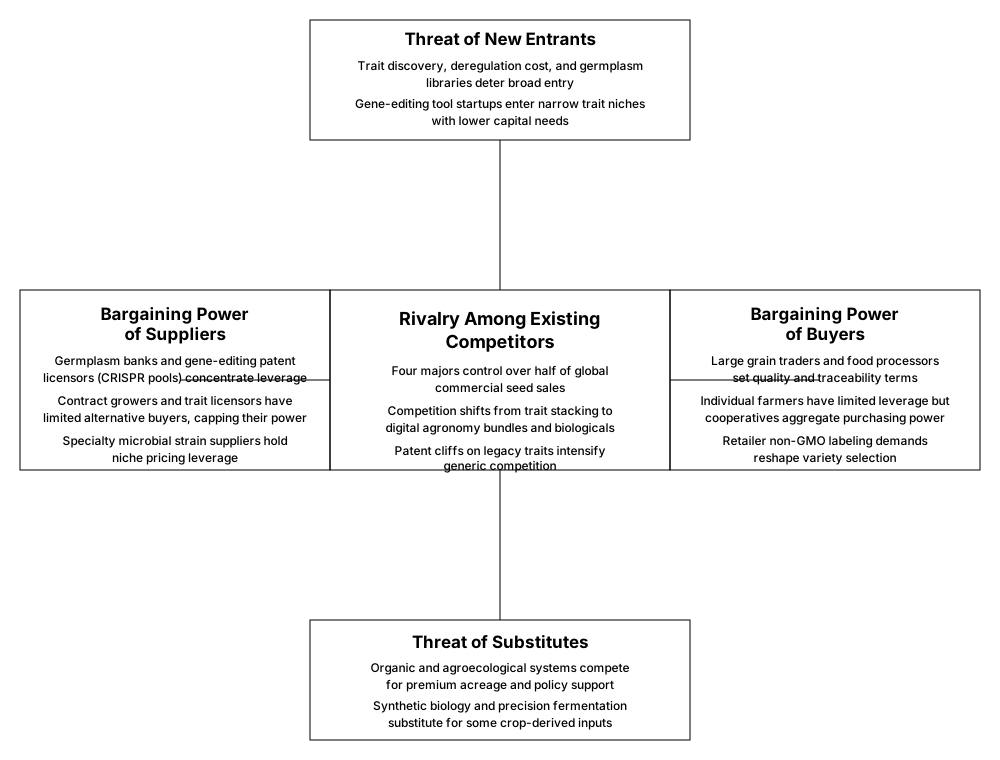
Porter's Five Forces framework clarifies why agricultural biotechnology behaves the way it does commercially, even when the underlying science is advancing quickly and, in the case of gene editing, becoming more accessible. Supplier power concentrates around a small number of germplasm libraries and gene-editing patent holders, buyer power is bifurcated between price-taking individual farmers and increasingly assertive grain buyers demanding traceability, rivalry is high but structured around a stable oligopoly rather than constant new entry, entry barriers remain formidable in mainstream row crops despite falling barriers in niche gene-editing applications and substitute threats come less from a single alternative technology than from organic and agroecological farming systems competing for premium acreage and policy support.
Bargaining power of buyers
Buyer power in agricultural biotechnology is genuinely split across two very different customer groups and treating them as a single buyer category understates the complexity boards need to weigh. Individual farmers, who represent the largest number of transactions, generally have limited bargaining leverage against the major seed and trait companies, because switching away from a proprietary trait often means accepting a real yield or input-cost penalty and because farm-level purchasing decisions are fragmented across millions of independent operators who cannot coordinate pricing pressure. Agricultural cooperatives partially offset this by aggregating purchasing volume on behalf of members, giving them more negotiating room on price and terms than any single farmer could achieve alone.
At the other end of the chain, large grain traders, food processors and retailers have grown more assertive and their leverage has increased over the past decade as consumer-facing brands demand traceability, non-GMO certification or sustainability documentation that flows back through the seed choice made at the farm level. This buyer segment does not purchase seed directly, but its specifications shape which varieties farmers plant, effectively exercising indirect bargaining power over the entire upstream industry. Government procurement and public seed programs constitute a third buyer type, particularly significant in emerging markets, where state agencies can negotiate preferential pricing or mandate technology transfer as a condition of market access, a dynamic that has shaped how multinational seed companies structure their entry into countries such as India and several African markets.
| Buyer segment | Source of leverage | Constraint on leverage |
|---|---|---|
| Individual commercial farmers | Choice among competing trait packages within a crop | Switching costs from yield risk and agronomic familiarity |
| Agricultural cooperatives | Aggregated purchasing volume across members | Still price takers relative to global commodity cycles |
| Grain processors and food brands | Traceability and certification requirements shape variety demand | Limited direct purchasing relationship with seed companies |
| Government procurement bodies | Market access conditions and technology transfer mandates | Political and budget constraints on program scale |
Bargaining power of suppliers
Suppliers to the agricultural biotechnology industry fall into several categories and the ones holding genuine pricing power are narrower than the industry's apparent complexity would suggest. Germplasm, the genetic raw material from which new varieties are bred, is held in both public gene banks and proprietary corporate collections built over decades and companies without deep proprietary germplasm libraries face a real constraint on how quickly they can introduce competitive new varieties, effectively making germplasm access a supply bottleneck controlled by a handful of long-established players.
Gene-editing tool and patent licensors occupy an increasingly powerful supplier position, since foundational CRISPR-related intellectual property is concentrated among a small number of academic institutions and licensing consortiums and any company wishing to commercialize a gene-edited product must typically secure a license that carries both upfront and royalty costs. Contract seed growers, who physically multiply seed under contract for the major companies, hold comparatively little power individually, since they depend on a small number of buyers for their entire business, though regional grower cooperatives have organized in some markets to improve terms. Specialty input suppliers for biologicals, including proprietary microbial strain collections, occupy a middle position:
their leverage is real but narrower in scope than germplasm or gene-editing patents, since a company can often substitute one microbial strain for another with sufficient screening effort
| Supplier type | Leverage driver | Degree of concentration |
|---|---|---|
| Proprietary germplasm collections | Decades of accumulated genetic diversity, difficult to replicate | High, held by a handful of majors and public banks |
| Gene-editing patent and platform licensors | Control of foundational CRISPR-related intellectual property | Moderate to high, concentrated among a few institutions |
| Contract seed growers | Physical multiplication capacity | Low, fragmented and buyer-dependent |
| Microbial strain and biological input suppliers | Proprietary strain libraries for biologicals | Moderate, narrower substitution difficulty than germplasm |
Rivalry among existing competitors
Rivalry in agricultural biotechnology is intense but structurally different from the price-based competition typical of commodity industries, because the primary competitive currency is trait performance and regulatory approval timing rather than headline price alone. Bayer AG, through its Crop Science division built substantially on the 2018 Monsanto acquisition and Corteva, spun out of the DowDuPont merger, together control a large share of the global commercial seed market, with independent tracking putting their combined share of the global commercial seed market at roughly 42% and their share of certain individual United States row crops considerably higher.1 Syngenta, under ChemChina ownership and BASF round out a group that, together, accounts for the majority of both global seed and global crop protection revenue, meaning competitive dynamics in seed genetics are inseparable from competitive dynamics in the adjacent crop protection business.
Within this oligopoly, competition plays out through trait stacking, where companies combine multiple resistance and tolerance genes into a single seed to capture a larger technology fee and increasingly through digital agronomy bundling, where the actual point of differentiation has shifted from the seed bag to the surrounding data and advisory service. Patent expiration adds a recurring competitive dynamic unique to this industry: when a major trait's patent protection lapses, generic seed producers can enter, compressing prices on that specific trait and pushing the patent holder to introduce next-generation, still-protected replacements, a cycle that has played out repeatedly with first-generation herbicide-tolerance traits. Regional and specialty players compete around the edges of this structure, particularly in crops the majors consider too small to prioritize, such as many fruits, vegetables and orphan staple crops important in developing economies.
| Competitive dimension | How it plays out | Strategic implication |
|---|---|---|
| Trait stacking in major row crops | Bundling multiple resistance genes into one seed | Raises technology fees but adds regulatory approval complexity |
| Digital agronomy bundling | Seed genetics packaged with data and advisory services | Shifts differentiation away from the seed itself |
| Patent cliff dynamics | Generic entry once first-generation trait patents expire | Forces continuous next-generation trait investment |
| Specialty and orphan crop competition | Smaller players serve crops majors deprioritize | Creates durable niches outside the oligopoly's focus |
Threat of new entrants
Entry barriers vary sharply by segment and this variation is one of the more strategically important and least discussed, features of the industry. In mainstream row crops such as corn, soybeans and cotton, entry barriers remain close to prohibitive for a company attempting to compete broadly, because building a globally competitive germplasm library, securing regulatory approvals across dozens of jurisdictions and establishing a farmer-facing distribution network each require years and substantial capital that only an already-scaled player can justify. The regulatory cost alone, historically estimated in the range of tens of millions of dollars per trait for full multi-country deregulation, functions as a de facto barrier independent of the underlying science.
Gene editing has meaningfully lowered technical entry barriers, since CRISPR-based tools are cheaper and faster to deploy than the transgenic methods that dominated the industry's first three decades and this has enabled a wave of well-funded startups to enter specific trait or crop niches without needing to replicate a major's entire commercial infrastructure. However, most of these entrants pursue a build-to-license or build-to-acquire strategy rather than attempting to become vertically integrated commercial seed companies, because distribution and farmer trust remain the harder barrier to overcome than the science itself. Biologicals present the most accessible entry point in the industry, given lighter regulatory review in most jurisdictions and lower capital requirements, which explains why the segment has attracted a disproportionate share of recent venture investment relative to its current revenue base.
| Entry barrier type | Segment where it applies | Height of barrier |
|---|---|---|
| Germplasm library depth | Mainstream row crop traits | Very high, decades to replicate |
| Multi-jurisdiction regulatory approval | Transgenic and some gene-edited crops | High, cost and timeline heavy |
| Gene-editing technical capability | Niche trait and specialty crop development | Falling, increasingly accessible |
| Regulatory review burden | Biological crop inputs | Low relative to transgenic traits |
Threat of substitutes
Substitution threats in agricultural biotechnology do not come from a single competing technology so much as from alternative farming philosophies and adjacent scientific fields that address the same underlying farmer needs through different means. Organic and agroecological farming systems represent the most visible substitute, competing directly for acreage and, in some markets, benefiting from price premiums and government support programs that make foregoing biotechnology traits economically viable for a subset of growers, particularly in the European Union, where cultivation of genetically modified crops remains tightly restricted.2
Conventional plant breeding, enhanced by genomic selection tools that do not require a regulated genetic modification event, offers a substitute pathway that is gaining relevance precisely because it avoids the regulatory friction attached to transgenic and, in some jurisdictions, gene-edited products, allowing companies to deliver improved traits without navigating biotechnology-specific approval regimes. Synthetic biology and precision fermentation, while adjacent rather than directly competing technologies, threaten to substitute for certain crop-derived agricultural inputs over the long run, particularly in specialty ingredients and some biological crop protection compounds, by producing target compounds in bioreactors rather than in the field. Chemical crop protection remains a substitute for biological pest and disease management approaches and the choice between them continues to hinge on cost, regulatory pressure and consumer preference rather than a decisive technological verdict in either direction.
| Substitute category | Mechanism of substitution | Constraint limiting adoption |
|---|---|---|
| Organic and agroecological systems | Forgo biotechnology traits entirely | Lower yields, higher labor intensity |
| Genomic-selection-enhanced conventional breeding | Improves traits without regulated modification | Slower trait development than direct editing |
| Synthetic biology and precision fermentation | Produces target compounds outside the field | High capital cost, narrow current applicability |
| Chemical crop protection | Substitutes for biological pest management | Regulatory and consumer pressure to reduce use |
Value chain and profit pools
The agricultural biotechnology value chain runs from fundamental genetic research through to the farmer's field and, increasingly, back into food supply chain traceability systems. Upstream, trait discovery and germplasm research form the foundation, combining genomic screening, gene-editing platform development and greenhouse or growth-chamber trials to identify candidate traits worth pursuing. This stage is research and development-intensive, funded largely through corporate research budgets at the majors and venture capital at startups and it carries the highest scientific risk in the chain, since only a small fraction of candidate traits ever reach commercial field trials.
Regulatory development and field validation constitute the second stage, where candidate traits undergo multi-year, multi-location field trials alongside the regulatory dossiers required for biosafety, environmental and food safety approval in each target market. This stage is where much of the industry's structural cost and time burden concentrates and it functions as the primary gate separating scientifically promising traits from commercially viable products. Seed production and multiplication follow, a comparatively lower-margin agronomic process often outsourced to contract growers in favorable climates, where the proprietary genetic material is physically reproduced at the scale needed for commercial sale.
Distribution and farmer-facing sales form the fourth stage, conducted through a mix of direct sales forces, independent seed dealers and agricultural retailers and this is where relationship depth and trust, built over repeated growing seasons, become a genuine competitive asset independent of the underlying genetics. Crop production itself, carried out by farmers, sits outside the biotechnology company's direct control but generates the usage data increasingly valuable to the fifth stage: digital agronomy and advisory services, which layer satellite imagery, soil sensing and yield prediction onto the genetics relationship to extend engagement beyond the point of sale. Finally, an enabling infrastructure layer spans intellectual property management, regulatory affairs and increasingly supply chain traceability systems that food companies require as a condition of purchase, a layer that has grown in importance as sustainability and origin claims have become commercially material.
Profit pool
Margin in agricultural biotechnology concentrates overwhelmingly in trait discovery and proprietary germplasm, the stages furthest from physical production and closest to intellectual property. A branded, trait-protected seed commands a substantial premium over a generic or off-patent equivalent and that premium is captured almost entirely by the trait owner and its licensed seed company partners rather than by the contract growers who physically multiply the seed or the farmers who plant it. Historically, this profit pool sat almost entirely within transgenic trait licensing, since that was the only commercially proven biotechnology pathway for most of the industry's first three decades.
That concentration has started to broaden, though not to disperse. Biologicals have emerged as a genuine second profit pool, benefiting from lighter regulatory scrutiny that shortens the path from discovery to revenue and from buyer demand for reduced synthetic chemical use that supports premium pricing even without the multi-decade patent protection typical of transgenic traits. Digital agronomy services represent a third, still-emerging profit pool, where the majors have invested heavily to convert a one-time seed transaction into a recurring, data-enabled relationship, though monetization of these services independent of the underlying seed sale remains a work in progress across the industry. Commodity seed production, grain handling and undifferentiated crop protection chemistry remain the lowest-margin stages, exposed directly to weather variability and global commodity price cycles that the higher, intellectual-property-protected stages of the chain are partially insulated from.
Industry economics and business models
Two business models dominate commercial agricultural biotechnology, with a third gaining ground. The first and by far the largest by revenue, is the integrated seed-and-trait model, in which a company develops proprietary genetics, secures regulatory approval and sells branded seed embedding a technology fee that compensates for the trait's development cost, typically enforced through end-user licensing agreements that restrict seed saving and replanting. This model is asset-heavy in research and development and in regulatory affairs infrastructure, but comparatively asset-light in physical production, since seed multiplication is frequently outsourced.
The second model is trait licensing, where a company that develops a trait but lacks full seed production and distribution capability licenses that trait to seed companies in exchange for royalty payments, a structure that allows smaller or more specialized biotechnology developers to monetize their science without building an entire commercial seed operation. This model has become more common as gene-editing tools lower the cost of trait discovery relative to the cost of commercial-scale seed distribution, effectively separating invention from go-to-market execution. A third and growing model layers subscription-based digital agronomy services on top of either of the first two, charging farmers or, in some structures, charging food companies for the data and traceability generated across a growing season, moving the industry's revenue mix gradually toward recurring, service-like economics rather than purely transactional, once-per-season seed sales.
Cost drivers and scalability
The industry's cost structure is dominated by fixed research and development and regulatory affairs spending, which does not scale down easily even when a particular product pipeline underperforms, making scale itself a meaningful cost advantage. A company spreading its trait discovery and regulatory infrastructure across a larger portfolio of crops and geographies achieves materially lower cost per commercialized trait than a smaller competitor attempting to fund the same infrastructure against a narrower product base, which is a structural reason the industry has consolidated rather than fragmented over the past two decades.
Variable costs, concentrated in seed multiplication, field trial logistics and distribution, scale more conventionally with volume and economies of scale here are real but secondary to the fixed-cost dynamics upstream. Economies of scope matter considerably, since a company with an established regulatory affairs function, farmer distribution network and germplasm library can introduce a new trait into an existing crop at a fraction of the cost of building that infrastructure from scratch, which is precisely why the majors continue to out-license smaller innovators' traits into their own established seed lines rather than ceding that infrastructure advantage. Unit economics for an individual trait improve sharply once a product clears regulatory approval in a major market, since the marginal cost of licensing that same trait into additional seed varieties or geographies is low relative to the upfront discovery and approval cost, creating a strong incentive to maximize a successful trait's footprint once it clears the regulatory gate rather than to constantly chase new discovery.
Moats, advantages and strategic levers
Defensibility in agricultural biotechnology rests on several distinct but reinforcing sources. Patent protection provides the most direct moat and its scope is considerable: available patent analysis shows that a small number of companies hold the overwhelming majority of United States patents covering genetically modified traits in the three largest row crops, with combined ownership above 90% for corn and canola and close to 80% for soybeans.3 Regulatory moats compound this effect, since the multi-year, multi-jurisdiction approval process a new entrant must clear functions as an additional barrier layered on top of intellectual property protection and larger companies can amortize regulatory affairs infrastructure across a broader product portfolio than a smaller rival can.
Switching costs matter at the farmer level, though less through contractual lock-in than through agronomic familiarity and risk aversion, since a farmer who has planted a particular trait package successfully for several seasons faces real yield uncertainty in switching, a behavioral moat that reinforces incumbent seed brands' retention even where price competition exists. Data and learning advantages are becoming more significant as digital agronomy scales, since a company with years of accumulated yield and field performance data across millions of acres can refine its trait recommendations and predictive models in ways a data-poor competitor cannot easily replicate, an advantage that compounds with scale rather than diminishing. Distribution reach constitutes a final and underappreciated moat, since a functioning network of dealers, agronomists and cooperative relationships, built over decades of direct farmer engagement, cannot be purchased quickly and represents one of the more durable reasons new entrants gravitate toward partnership or licensing rather than head-on distribution competition.
Strategic levers
Companies operating in or entering agricultural biotechnology have several genuine levers available, though their effectiveness varies by starting position. Customer segment focus, choosing to serve specialty and orphan crops or specific geographies the majors deprioritize, allows smaller players to build a defensible niche without confronting incumbents directly on their core row-crop battleground and this has proven a viable path for several regionally focused seed companies. Product scope decisions, particularly whether to compete across the full trait-to-distribution chain or specialize narrowly in trait discovery for licensing, shape capital intensity substantially and the choice should track a company's actual comparative advantage rather than an aspiration toward full vertical integration.
Vertical integration versus partnering represents perhaps the most consequential lever for mid-sized players, since building proprietary distribution is capital-intensive and slow, while partnering with an established seed company accelerates market access at the cost of margin share and the right choice depends heavily on whether a company's core asset is a defensible trait or merely an incrementally better one. Geographic expansion carries disproportionate regulatory complexity in this industry compared with most others, since a trait approved in one major market cannot simply be sold in another without repeating much of the regulatory process, making geographic sequencing a genuine strategic decision rather than a straightforward scaling exercise. Ecosystem orchestration, bundling genetics with crop protection, biologicals and digital agronomy into a single farmer relationship, has become the majors' dominant playbook for defending share against both generic trait competition and narrower digital-only entrants and it is difficult for a single-product company to replicate without a partnership.
Structural risks, regulation and trends
Regulatory risk is the industry's most consequential structural exposure and it has become less predictable rather than more so in recent years. In the United States, the 2020 SECURE rule sought to regulate biotechnology products based on their characteristics rather than the method used to create them, easing the path for many gene-edited crops that lack foreign DNA, but a December 2024 federal court ruling vacated that rule, reinstating older, more burdensome review procedures and injecting genuine uncertainty into development timelines for products already in the pipeline.4 Regulatory divergence across geographies compounds this risk at a global level, since the European Union's restrictive stance toward genetically modified cultivation contrasts sharply with more permissive frameworks in the United States, Brazil and increasingly parts of Asia, forcing multinational companies to run parallel regulatory strategies rather than a single global approval process.
Technology disruption risk cuts in an unusual direction for this industry: it favors incumbents as much as it threatens them, since gene editing has lowered discovery costs for everyone but has not meaningfully reduced the distribution and regulatory barriers that protect the majors' commercial position, meaning the disruption has so far reshaped where innovation happens rather than who captures most of its commercial value. Commodity and price risk flows through from the broader agricultural economy, since seed and trait purchasing tracks farm income and planted acreage, both of which are sensitive to global grain prices and weather, meaning this industry's revenue is more cyclical than its long-term structural growth story would suggest on its own. Geopolitical and supply chain risk has grown more salient as agricultural biotechnology has become entangled with food security policy and several governments now treat seed and trait access as a strategic asset, a shift visible in China's continued push to build domestic agricultural biotechnology capability rather than depend indefinitely on Western trait licensing.
Global adoption trends remain broadly favorable to the industry's growth trajectory even amid this regulatory volatility. Total global biotech crop cultivation reached roughly 210 million hectares by 2024, continuing a multi-decade expansion from under two million hectares in the mid-1990s, though growth has moderated from its earlier exponential pace as the largest adopting countries approach saturation in their core row crops.5 Market forecasts converge on continued mid-to-high single digit annual growth for the broader agricultural biotechnology market through the early 2030s, with independent estimates placing the addressable market in the range of 150 to 175 billion dollars as of 2026 and growing at a compound annual rate generally estimated between roughly 7% and 9% over the following several years.6 Demand drivers include population growth concentrated in regions with limited arable land expansion, climate volatility pushing demand for drought and heat-tolerant varieties and food security policy that increasingly treats agricultural biotechnology capability as a matter of national strategic interest rather than purely commercial concern.
For companies considering entry, the strategic playbook depends heavily on starting resources. A niche entry strategy, targeting a specific specialty crop, geography or biological input category where regulatory and distribution barriers are lower, offers the more realistic path for a company without an existing seed business and partnering with or licensing to an established distributor rather than attempting to build proprietary distribution from scratch generally shortens the path to revenue considerably. A broad entry strategy attempting to compete directly in major row crops is rarely viable without either exceptional capital backing or a genuinely superior proprietary technology platform that an incumbent would rather license than compete against, which is why so many well-funded agricultural biotechnology startups ultimately pursue an acquisition or licensing exit rather than an independent path to scale.
The real barrier in this industry was never the biology, it has always been the twenty years of regulatory and distribution infrastructure standing between a laboratory result and a farmer's planting decision
For incumbents, the strategic imperative is less about defending any single trait, since individual patents will eventually expire and more about continuously deepening the ecosystem bundle around genetics: crop protection, biologicals, digital agronomy and traceability services that raise the switching cost of leaving the relationship even after a specific trait goes generic. Expansion into biologicals and digital services, rather than into additional transgenic trait discovery alone, represents the more capital-efficient growth path for the majors given the regulatory cost curve facing new transgenic traits and the companies that have moved fastest in this direction appear better positioned to sustain margin as the traditional trait-licensing profit pool matures.
Caselet: Corteva Agriscience and the trait-to-distribution playbook
Corteva Agriscience offers a useful illustration of how the industry's economics play out inside a single company, because its very formation traces the consolidation dynamics described throughout this analysis. Corteva emerged in 2019 as the agricultural spin-off of the DowDuPont merger, itself the product of combining Dow Chemical's and DuPont's respective agricultural businesses, including DuPont Pioneer, one of the industry's oldest and most established seed genetics franchises dating back to the 1920s. That lineage matters because it gave Corteva, from its first day as an independent public company, something a genuine startup could never assemble quickly:
a global germplasm library, a regulatory affairs function experienced across dozens of countries and a farmer distribution network built over roughly a century of direct relationships
Corteva's commercial structure spans seed genetics, crop protection chemistry and, increasingly, biologicals and digital services, reflecting the ecosystem-bundling strategy this analysis identifies as the industry's dominant incumbent playbook. Rather than compete solely on individual trait performance, the company has pursued a strategy of pairing its Pioneer-branded seed genetics with proprietary crop protection products and an expanding biologicals portfolio, aiming to make the overall farmer relationship stickier than any single product line could achieve alone. This mirrors the broader industry shift away from trait-by-trait competition and toward bundled-relationship competition, a shift driven by the reality that individual transgenic traits eventually face patent expiration and generic competition, while a well-managed multi-product farmer relationship can sustain premium pricing considerably longer.
On gene editing specifically, Corteva has positioned CRISPR-Cas-based development as a core part of its forward pipeline, emphasizing the technology's ability to compress trait development timelines relative to the transgenic methods that built the company's legacy seed business. This reflects the industry-wide recognition that gene editing offers a genuine cost and speed advantage over first-generation transgenic technology, though Corteva's approach also illustrates how an established incumbent can absorb a disruptive technology into its existing commercial infrastructure rather than being disrupted by it, since the company already possessed the regulatory affairs capability, germplasm access and distribution network needed to commercialize gene-edited products quickly once the underlying science matured.
Corteva's position within the broader market structure also demonstrates the industry's persistent concentration. Alongside Bayer Crop Science, the company anchors an oligopoly in which the two firms together account for a substantial share of the commercial seed market globally and an even larger share within specific United States row crops such as corn and soybeans. This concentration has shaped Corteva's strategic choices in observable ways:
rather than pursue every available trait opportunity independently, the company has engaged actively in licensing partnerships and selective acquisitions of smaller gene-editing and biologicals developers, a pattern consistent with the broader industry tendency for majors to acquire or license external innovation rather than rely exclusively on internal discovery
The company's operating history also underscores the industry's regulatory exposure as a genuine business risk rather than an abstract policy concern. Corteva's product pipeline planning must account for regulatory divergence across its major markets, sequencing which crops and traits it pursues first in which geography based on where approval pathways are clearest, a planning discipline that smaller or newer entrants without Corteva's decades of regulatory affairs experience would find considerably harder to execute with confidence. Taken together, Corteva's trajectory from a century-old seed franchise through a major corporate spin-off into a bundled genetics, chemistry and biologicals platform captures, in a single company history, most of the structural forces that define agricultural biotechnology as a whole:
consolidation-driven scale advantage, regulatory navigation as a genuine competitive skill and a strategic pivot from single-product trait competition toward ecosystem-level farmer relationships as the more durable source of margin
Corteva's experience suggests that the industry's future winners, whether incumbents or new entrants that succeed through partnership rather than head-on competition, will be defined less by any single scientific breakthrough than by the discipline to convert biological innovation into a commercially navigable, regulator-cleared, farmer-trusted product, repeatedly and across a widening portfolio of crops and geographies.
- 1Bayer And Corteva Control A Large Share Of Global Commercial Seed Sales
- 2The European Union Restricts Genetically Modified Crop Cultivation More Than Most Other Major Markets
- 3A Handful Of Companies Hold The Vast Majority Of United States Patents For Major Genetically Modified Crops
- 4A Federal Court Ruling Vacated The USDA Rule Regulating Biotechnology Crops In Late 2024
- 5Global Biotech Crop Cultivation Reached Roughly 210 Million Hectares By 2024
- 6Independent Market Estimates Size Global Agricultural Biotechnology At Roughly 150 To 175 Billion Dollars In 2026
Agricultural biotechnology converts genetic and microbial science into food security and farm productivity at planetary scale, serving seed companies, grain processors, governments and, indirectly, every consumer of food. Its economics reward proprietary genetics, regulatory navigation and distribution reach over manufacturing scale, concentrating margin in trait licensing, biologicals and data-enabled agronomy rather than in seed multiplication or grain handling. The industry's defensibility rests on patent estates, germplasm libraries and farmer relationships built over decades, which explains why four companies still set the pace despite genuinely open gene-editing tools. The strategic choice ahead is stark: incumbents must decide how much of the value chain to keep proprietary versus opened to platform partners, while entrants must pick a narrow trait or geography where regulatory clarity and unmet agronomic need overlap, rather than attempting to out-invest the majors on broad trait discovery.
Citation
Cite this article
Sridharan, M. A. (2024, February 13). Industry Analysis: Agricultural Biotechnology. Think Insights. https://thinkinsights.net/strategy/industry-analysis-agricultural-biotechnology (Accessed [[ACCESS_DATE]])
Sridharan, Mithun A. "Industry Analysis: Agricultural Biotechnology." Think Insights, 13 Feb. 2024, https://thinkinsights.net/strategy/industry-analysis-agricultural-biotechnology. Accessed [[ACCESS_DATE]].
Mithun A. Sridharan, "Industry Analysis: Agricultural Biotechnology," Think Insights, February 13, 2024, https://thinkinsights.net/strategy/industry-analysis-agricultural-biotechnology. Accessed [[ACCESS_DATE]].
Sridharan, M.A. (2024) 'Industry Analysis: Agricultural Biotechnology', Think Insights. Available at: https://thinkinsights.net/strategy/industry-analysis-agricultural-biotechnology (Accessed: [[ACCESS_DATE]]).
M. A. Sridharan, "Industry Analysis: Agricultural Biotechnology," Think Insights, 2024. [Online]. Available: https://thinkinsights.net/strategy/industry-analysis-agricultural-biotechnology. [Accessed: [[ACCESS_DATE]]].
Sridharan MA. Industry Analysis: Agricultural Biotechnology. Think Insights. Published February 13, 2024. Accessed [[ACCESS_DATE]]. https://thinkinsights.net/strategy/industry-analysis-agricultural-biotechnology
Test Your Knowledge
Industry Analysis: Agricultural Biotechnology
Challenge yourself on the concepts from this article and see how well you understood them.
Subscribers get weekly quizzes and insights — subscribe free
Sponsor this article
Partner with Think Insights
Reach 50,000+ business leaders, consultants, and strategists. Feature your brand alongside expert articles on strategy, leadership, and digital transformation.
Become a Sponsor