Turning Strategy Into Action
Business strategies often come with grand terms like "growth," "holistic," or "tactical." Yet, for employees working on the ground, these strategies frequently appear confusing or impractical. Words like "unclear," "fuzzy," and even "bizarre" often surface when frontline workers discuss management's plans.
Why this disconnect? It largely stems from how strategies are communicated, executed, and supported as they filter down through management layers. Employees rarely see the full strategy but instead encounter fragments:
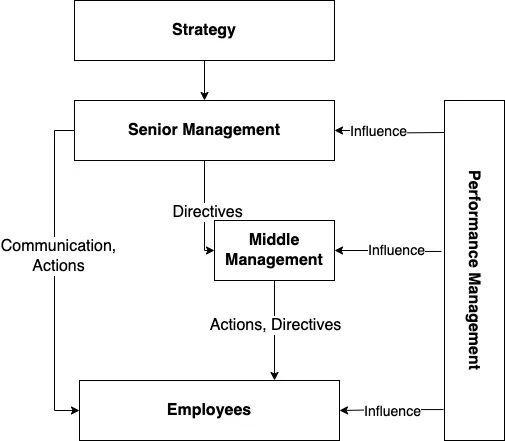
Employees rarely see the strategy itself—instead they see the following:
- Communications from Senior Management/the project team about the strategy
- The actions of Senior and Middle Management as the strategy is executed
- Directives from Senior Management, as filtered by Middle Management
- The influences exerted by the Performance Management System, where one exists
All of these things affect how an employee views the strategy being espoused by their managers. To be effective, then, managers need to apply the following principles to their communications, actions, directives, and the design of their performance management system.
Communicating the Strategy
A successful strategy begins with clear, energizing communication. Employees need to feel inspired and aligned with the overarching goals. To achieve this, leaders should focus on three elements: passion, symbols, and facts.
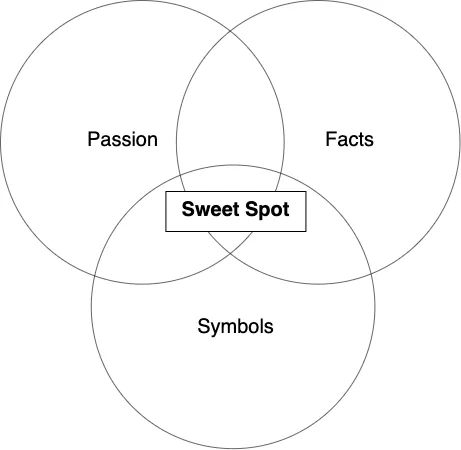
- Passion: Speak with conviction. If you lack enthusiasm for your strategy, why should anyone else care? Passion communicates belief and purpose
- Facts: Provide a baseline for belief. Share data that illustrates the need for the strategy and use measurable outcomes to track progress
- Symbols: Use tangible markers to rally teams. A slogan, logo, or even a numerical goal can unify efforts. For example, a target like "20×50" (20% market share by 2050) provides clarity and focus
Equally important is how you communicate. Personal, two-way interactions—like Q&A sessions, briefings, or open discussions—build trust and clarity. Impersonal channels like emails or memos can alienate employees, leaving them to guess or misinterpret the message.
Leading Through Action
Actions amplify words. leadership behaviors set the tone for how strategies are perceived and implemented.
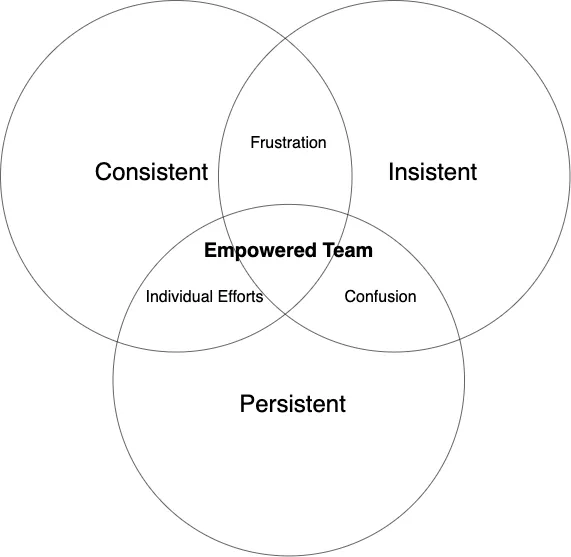
Successful leaders are:
- Insistent: Clearly outline performance expectations and uphold them. This gives employees a sense of boundaries and accountability
- Persistent: Stay consistent in your expectations year-round. Driving performance cannot be a once-a-quarter exercise—it must be an ongoing effort
- Consistent: Hold everyone to the same standards. Don't allow favoritism or inconsistency in rewards and consequences
When leaders fail to balance these elements, teams suffer.
- Without persistence, performance becomes sporadic and unreliable
- Without insistence, employees feel uninspired to push themselves
- Without consistency, confusion arises as the rules seem to change based on the individual or circumstance
When all three are in harmony, leaders create a high-performing and motivated workforce.
Providing Direction
Simply giving directions is not enough. Leaders must also provide the authority and capability for employees to carry out their tasks.
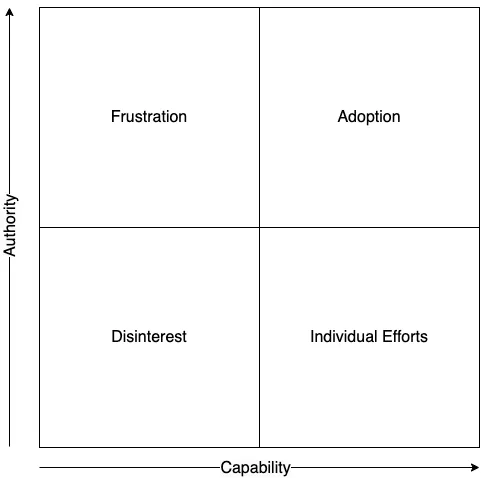
- Capability: Invest in training and development. Equip your teams with the skills and tools they need to succeed.
- Authority: Give employees the freedom to act. Provide them with budgets, decision-making independence, and access to relevant data.
Failing to balance these two elements can lead to frustration and errors:
- With capability but no authority, employees feel micromanaged and stifled.
- With authority but no capability, mistakes are inevitable as employees act without proper knowledge.
- With neither, engagement fades, and employees disengage entirely.
Leaders must empower their teams with both the tools and the trust to carry out their roles effectively.
Managing Performance
Performance management systems are critical to aligning individual efforts with the broader strategy.

However, these systems must meet two criteria to be effective:
- Clarity: Employees need to understand the system's purpose and their role in it. Ambiguity breeds frustration and disengagement.
- Consistency: Enforcement must be uniform. A system that applies differently across teams or individuals erodes trust and undermines its purpose.
When a performance management system is both clear and consistent, it becomes a powerful driver of accountability and improved outcomes. Employees know what is expected and see those expectations applied fairly, creating a culture of sustained performance.
Aligning Leadership with Strategy
For a strategy to succeed, it must be woven into every aspect of leadership—from communication to action to performance management. Leaders who fail to align these elements risk creating disconnects between their vision and how it is executed on the ground.
To bridge the gap between strategy and execution, leaders must focus on:
- Clear and inspiring communication that rallies employees around a shared vision.
- Consistent, persistent, and insistent actions that reinforce expectations and motivate teams.
- Empowering employees with the authority and capability to execute their roles effectively.
- A fair and transparent performance management system that drives accountability.
Leadership isn't just about creating a strategy; it's about making sure it works at every level of the organization. By engaging with employees, leading by example, and providing the tools for success, leaders can turn even the most complex strategies into actionable, coalface-ready plans.