Dragon Dreaming Method


Many projects, from small community gardens to complex organizational transformations, face familiar challenges: missed deadlines, budget overruns, internal conflicts, and ultimately, a failure to achieve their intended impact. Dragon Dreaming offers a different path, a holistic project design and management methodology that prioritizes collaborative creation, continuous learning, and joyful celebration. This approach, developed by John Croft, blends ancient wisdom with modern systems thinking to create projects that are not only effective but also deeply rewarding for everyone involved.
What are the four phases of Dragon Dreaming?
Dragon Dreaming moves through four phases: Dreaming, Planning, Doing, and Celebrating. These phases are cyclical and interconnected, not rigid sequential steps.
What is the triple bottom line in the Dreaming phase?
The triple bottom line refers to three considerations: personal fulfillment for participants, benefit to the community, and positive impact on the environment.
How does Dragon Dreaming handle mistakes during project execution?
Mistakes are treated as learning opportunities rather than failures. The method encourages experimentation and adaptability when unexpected challenges arise during the Doing phase.
Why is the Celebrating phase considered important?
Celebration reinforces team cohesion, acknowledges individual contributions, and extracts lessons for future projects. It is treated as an integral part of the learning cycle, not a symbolic gesture.
How does Dragon Dreaming differ from traditional project management?
It emphasizes shared ownership, continuous learning, and ecological responsibility. The Celebrating phase is a formal component, and all team members participate in shaping plans rather than following top-down directives.
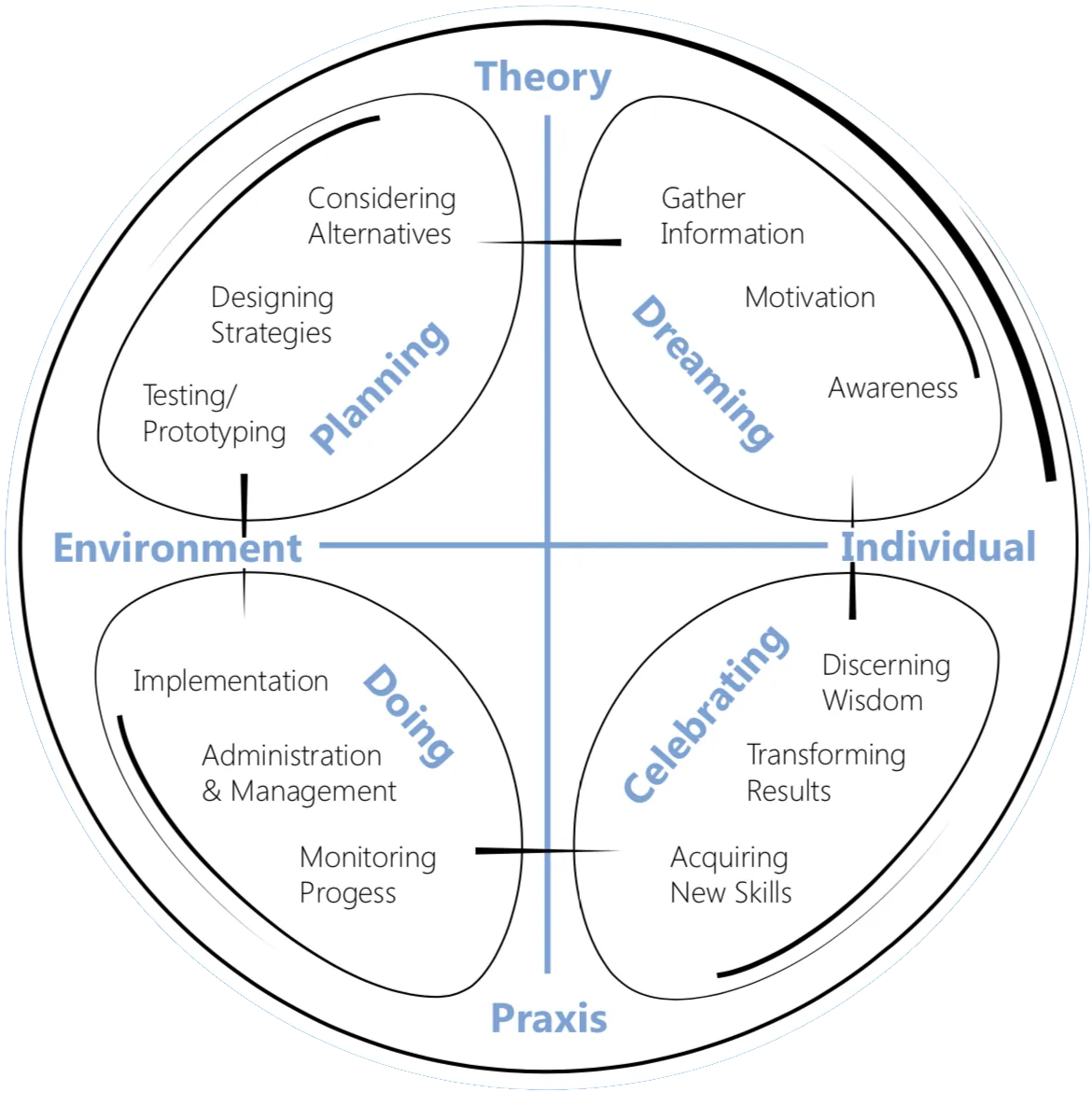
At its core, Dragon Dreaming is a cyclical process that moves through four interconnected phases:
- Dreaming
- Planning
- Doing, and
- Celebrating
The four phases of Dragon Dreaming are not rigid steps but rather fluid stages that interact and inform one another. They create a dynamic process of continuous improvement and adaptation. This cycle ensures projects are grounded in a shared vision, meticulously planned, effectively executed, and thoroughly appreciated. It emphasizes shared ownership, continuous learning, and a focus on creating projects that benefit individuals, communities, and the planet. This holistic approach fosters a sense of collective responsibility and makes project work a more meaningful and engaging experience.
Dreaming
The Dreaming phase is where the project's initial vision emerges. It is a time for open exploration, uninhibited brainstorming, and allowing creativity to flourish. Teams explore their shared values, identifying the core aspirations that will guide the project. This phase prioritizes inclusivity, inviting all participants to contribute their unique perspectives and dreams. A crucial element of this stage is the consideration of the "triple bottom line": personal fulfillment for those involved, benefit to the community, and positive impact on the environment. This ensures that projects align with ethical and ecological principles. The dreaming phase uses techniques like visioning exercises, storytelling, and open dialogue to create a shared understanding of the project's purpose and potential. It sets the emotional and motivational foundation for the entire project.
Planning
The Planning phase transforms the initial dream into a tangible roadmap. Teams develop detailed plans, outlining specific tasks, timelines, resource needs, and responsibilities. This phase emphasizes collaboration and shared responsibility. Every team member has a voice in shaping the plan, creating a sense of ownership and commitment. Clear communication, transparent decision-making processes, and well-defined roles are essential for effective planning. Risk assessment and contingency planning are also critical aspects of this phase. The planning phase ensures the project has a solid structure and a clear path forward. It turns the abstract dream into a concrete set of actions.
Doing
The Doing phase is where the planned actions come to life. Teams work collaboratively to execute the tasks outlined in the planning phase. Dragon Dreaming emphasizes flexibility and adaptability during this stage. Unexpected challenges are not viewed as setbacks but as opportunities for learning and improvement. Regular communication, feedback loops, and open dialogue ensure the project stays on track and that necessary adjustments happen promptly. Mistakes are seen not as failures but as valuable learning experiences. This approach encourages experimentation, innovation, and a proactive response to changing circumstances. The doing phase is where the project's tangible outcomes begin to materialize.
Celebrating
The Celebrating phase, often overlooked in traditional project management, is a crucial component of Dragon Dreaming. This phase is dedicated to acknowledging and appreciating the team's achievements. It provides a space to reflect on the project journey, celebrate successes, and learn from any challenges encountered. Celebration strengthens team cohesion, reinforces positive experiences, and generates momentum for future projects. This phase is not merely a symbolic gesture; it is an integral part of the learning cycle, allowing teams to extract valuable lessons and apply them to future endeavors. It also provides an opportunity to acknowledge individual contributions and strengthen relationships within the team.
Case Study - Building a Community Garden
Imagine a group of neighbors who want to create a community garden in a vacant lot. They begin with the Dreaming phase. They gather and share their visions for the garden. Some dream of fresh vegetables, others of a beautiful green space, and still others of a place for the community to connect. They discuss how the garden can benefit everyone in the neighborhood, including providing food for those in need and creating a habitat for local wildlife. They commit to making the garden personally fulfilling, beneficial for the community, and good for the local ecosystem.
They then move into the Planning phase. They decide on the garden's layout, choose the plants they will grow, and create a schedule for planting, watering, and weeding. They determine the resources they need, such as tools, seeds, and compost, and figure out how to obtain them. They assign responsibilities to different team members and establish clear communication channels. They also consider potential challenges, such as pests, weather conditions, and funding limitations, and develop contingency plans.
Next comes the Doing phase. The neighbors work together to clear the lot, build raised beds, plant seeds, and tend to the garden. They encounter some unexpected challenges, such as a late frost and a persistent weed problem. However, they work together to find solutions, learning from their mistakes and adapting their plans as needed. They share their knowledge and skills, supporting one another and building strong relationships.
Finally, they reach the Celebrating phase. They organize a community gathering to celebrate the garden's completion. They share the first harvest with their neighbors, enjoy food and music, and reflect on their journey. They acknowledge the contributions of each team member and celebrate the positive impact the garden has on their community and the environment. This celebration reinforces their commitment to the project and motivates them to continue working together in the future.
Dragon Dreaming offers a powerful alternative to traditional project management. It emphasizes shared ownership, continuous learning, and joyful celebration. The four phases—Dreaming, Planning, Doing, and Celebrating—create a cyclical process that allows projects to evolve and adapt. This methodology fosters creativity, strengthens team cohesion, and increases project success rates. It creates a more enjoyable and fulfilling experience for all involved, resulting in projects that not only achieve their intended outcomes but also contribute positively to individuals, communities, and the planet. Dragon Dreaming is more than just a project management method; it is a way of working together that empowers collaborative action and transforms dreams into reality. It provides a framework for creating projects that are not only effective but also deeply meaningful and sustainable.
Citation
Cite this article
Sridharan, M. A. (2022, March 15). Dragon Dreaming Method. Think Insights. https://thinkinsights.net/consulting/dragon-dreaming-method (Accessed [[ACCESS_DATE]])
Sridharan, Mithun A. "Dragon Dreaming Method." Think Insights, 15 Mar. 2022, https://thinkinsights.net/consulting/dragon-dreaming-method. Accessed [[ACCESS_DATE]].
Mithun A. Sridharan, "Dragon Dreaming Method," Think Insights, March 15, 2022, https://thinkinsights.net/consulting/dragon-dreaming-method. Accessed [[ACCESS_DATE]].
Sridharan, M.A. (2022) 'Dragon Dreaming Method', Think Insights. Available at: https://thinkinsights.net/consulting/dragon-dreaming-method (Accessed: [[ACCESS_DATE]]).
M. A. Sridharan, "Dragon Dreaming Method," Think Insights, 2022. [Online]. Available: https://thinkinsights.net/consulting/dragon-dreaming-method. [Accessed: [[ACCESS_DATE]]].
Sridharan MA. Dragon Dreaming Method. Think Insights. Published March 15, 2022. Accessed [[ACCESS_DATE]]. https://thinkinsights.net/consulting/dragon-dreaming-method
Test Your Knowledge
Dragon Dreaming Method
Challenge yourself on the concepts from this article and see how well you understood them.
Subscribers get weekly quizzes and insights — subscribe free
Sponsor this article
Partner with Think Insights
Reach 50,000+ business leaders, consultants, and strategists. Feature your brand alongside expert articles on strategy, leadership, and digital transformation.
Become a Sponsor